8 Jul 2017

Forgotten Triangle

Apley Woods - Wednesday, 5th July 2017

During the winter Friends of Apley Woods approached me to see if I would bring the Joy of Wildlife group to the woods, especially the "Forgotten Triangle". This is a small wedge of woodland that lies to the west of the Pool and is wedged between the A442 and the grounds of the former Maxell factory.

As Apley Woods is almost on my doorstep it was easy to agree to this request. A benefit of this, of course, is that I could have a lie in as I would not have to leave home until 10.15am. Luxury.

Unfortunately the rival attraction of a spider course at Preston Montford and holidays in Lulworth reduced our number to a half-dozen. The absentees missed a good day in lovely weather.

We were met with chocolate cookies as we parked and got ready - an excellent start! Then we made our way to the main meadow where we split into two with the "botanists" doing hedgerow surveys


Whilst the entomologists explored the meadow


Actually we split into three as our elder statesman, making a welcome return after a long absence doing other things, spent the next hour removing grass seed, acquired walking across a field, from his socks and boots.


He showed remarkable patience in this task.

An early find amongst the nettles bordering the grassland was the ground bug Heterogaster urticae.


We were drawn to an area of ox-eye daisies and knapweed


This area was a magnet for flying things, mainly bumble bees


But also butterflies

A white - Photograph: Jim Cresswell

Cinnabar - Photograph: Jim Cresswell

Narrow-bordered 5-spot burnet - Photograph: Jim Cresswell
And hoverflies

Eristalis sp. - Photograph: Jim Cresswell

Nearby a Ragwort plant stood tall having escaped the notice of a local resident who removes the flowers to stop them seeding. Lower down the plant Cinnabar caterpillars were nestled on a leaf


And on top the flowers attracted more hoverflies

Another Eristalis sp - Photograph: Jim Cresswell
Amazingly it was time for lunch. How time flies when you are enjoying yourself! It took a few minutes to find somewhere in the shade but eventually we settled down to eat our supplies and have a chat.

Tempting as it was to lie in the long grass for the rest of the day we moved on around the pool to the object of the outing - the "Forgotten Triangle".

This area used to be very dark and dingy - a fitting home for Eeyore. During the winter many trees were removed which provided light, hopefully, to enable the ground flora to re-establish. A dead hedge was constructed along the boundary with the ex-Maxell factory grounds and hedgerow plants put in place alongside the road to screen the area. Local schools created insect refuges and these had been installed on some trees.


There had been a good covering of bluebells earlier in the year but nettles were the main plant for our visit. More "management" is required but it is a start.

Like iron filings we were attracted back by the magnetism of the meadow. This time we concentrated on an area that is an ephemeral pool. For our visit it was a mass of bistort, mayweed and cudweed.


We saw several adult dock bugs apparently enjoying the sun


Learning from the photography masters I adopted a prone position to get this shot. Fortunately the ground was dry - I did check beforehand!

A neighbouring umbellifer provided food for another hoverfly, known by us as the "scruffy" one

Cheilosia illustrata - Photograph: Jim Cresswell
Another, more handsome, hoverfly, Eristalis intricarius, was seen on the seed head of yellow rattle

Photograph - Jim Cresswell
Finally I found an interesting looking (as it was not black or green and it had a bit of a pattern) weevil amongst a tray full of grass seed 


I have no idea what it is. Any offers?

Once again time caught up with us and we made our way back to our cars and returned home after another satisfying day.

My thanks to the Friends of Apley Woods for arranging this visit and to Jim Cresswell for supplementing my photographs.


5 Jul 2017

Rain and Cake

Newport Canal - Wednesday, 28 June 2017

The week since we visited has flown by. 

My attempt to do this report last night was thwarted by a Windows update so now during a brief interlude between getting up and preparing for our outing to Apley Woods here, in an attempt to avoid yet another "multiple-header" report of our recent activities, is a brief account of our visit to this site.

Five of us met in the car park.

It was raining but quite lightly.

We walked to the canal from the car park, down the tow path to the west.

Lunch was taken at a picnic table. Cake to celebrate my impending birthday was consumed.

We walked a bit further, turned around and walked back to the cars and went home.

Here's a picture of the canal


That's it in a nutshell. O yes, I almost forgot - we looked at the flora and fauna.

Here's another picture of the canal.


Time to get ready for our next outing.

Ah! I have a little more time so I can provide detail and pictures.

After a little confusion about which car park to use we made our way to the canal. We spent quite a while in the area shown above. Firstly as it was raining and we did not want to go too far in case we decided it was too wet and secondly we were waiting for a (planned) late arrival. 

Just to the right of the second picture above was an area that looked extremely interesting but it was fenced off and we could only peer in.

Eventually we moved on coming to the first lock just before the canal goes under the main road that runs through Newport. Here a Flowering rush was in flower.


As the canal goes under the bridge its width is reduced to a narrow channel


They must have used very narrow boats on this canal!

This fly was caught. It was photographed in the glass pot in case it flew away.

Photograph: David Williams

At the time we had no idea what it was, but some considered research later identified it as a soldier fly Oplodontha viridula which has been allocated the common name "Common green colonel" - who makes up these names?

One less welcome sight was a dead rat

Photograph: Les Hughes
Our meander down the canal towpath continue, as did the light rain.

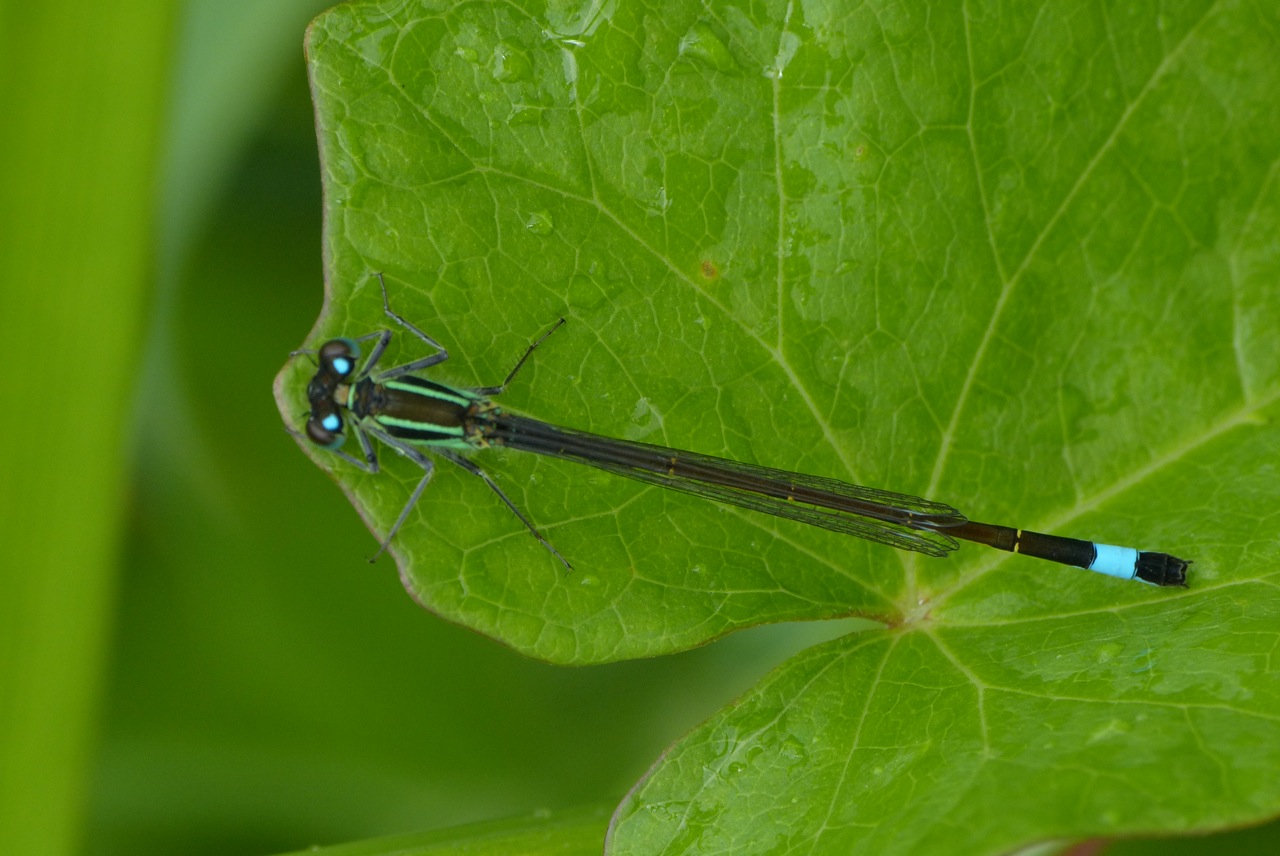
Our observations included a blue-tailed damselfly

Photograph: Jim Cresswell
A longhorn beetle Leptura quadrifasciata

Photograph: David Williams
A bur-reed

Photograph: Jim Cresswell
And a Vapourer moth larva

Photograph: Jim Cresswell
We were also finding quite a number of a second soldier fly Oxycera rara

Photograph: David Williams
This fly is "commonly" named a four-barred major. 

Lunch was taken at a convenient but wet picnic table. As mentioned above, birthday cakes were provided and consumed. All of this was under the glare of a mute swan and begging calls of cygnets.


As we consumed our lunch, bravely ignoring the swans' pleas, a local resident appeared and put our a bowl of grain which the cygnets set about consuming. He then threw in lots of bread that the adult swans feasted upon!

Our meander continued. I cannot recall if it was still raining.

An early spot after lunch was a common darter

Photograph: Jim Cresswell
In this part of the canal there was quite a lot of bindweed and many of their flowers were being fed upon by the hoverfly Episyrphus balteatus.


This fly has been assigned the common name "Marmalade fly" which is a little more understandable than the others mentioned above.

(Am I ranting? Why? I use common names more often than not. Did the ones I use arise through common usage - or are they just the fantasy of some person sitting over a pint with nothing else to do which have worked there way into common usage? I am very inconsistent!)

On with the walk.

We reached the next lock


The decision to turn back was made.

But not before we had taken a look just a little bit further on.

Our persistence was rewarded with sightings of very young Parent bug instars packed together on birch leaves with an adult nearby.

Photograph: David Williams
Here is a close up of one of the leaves

Photograph: David Williams
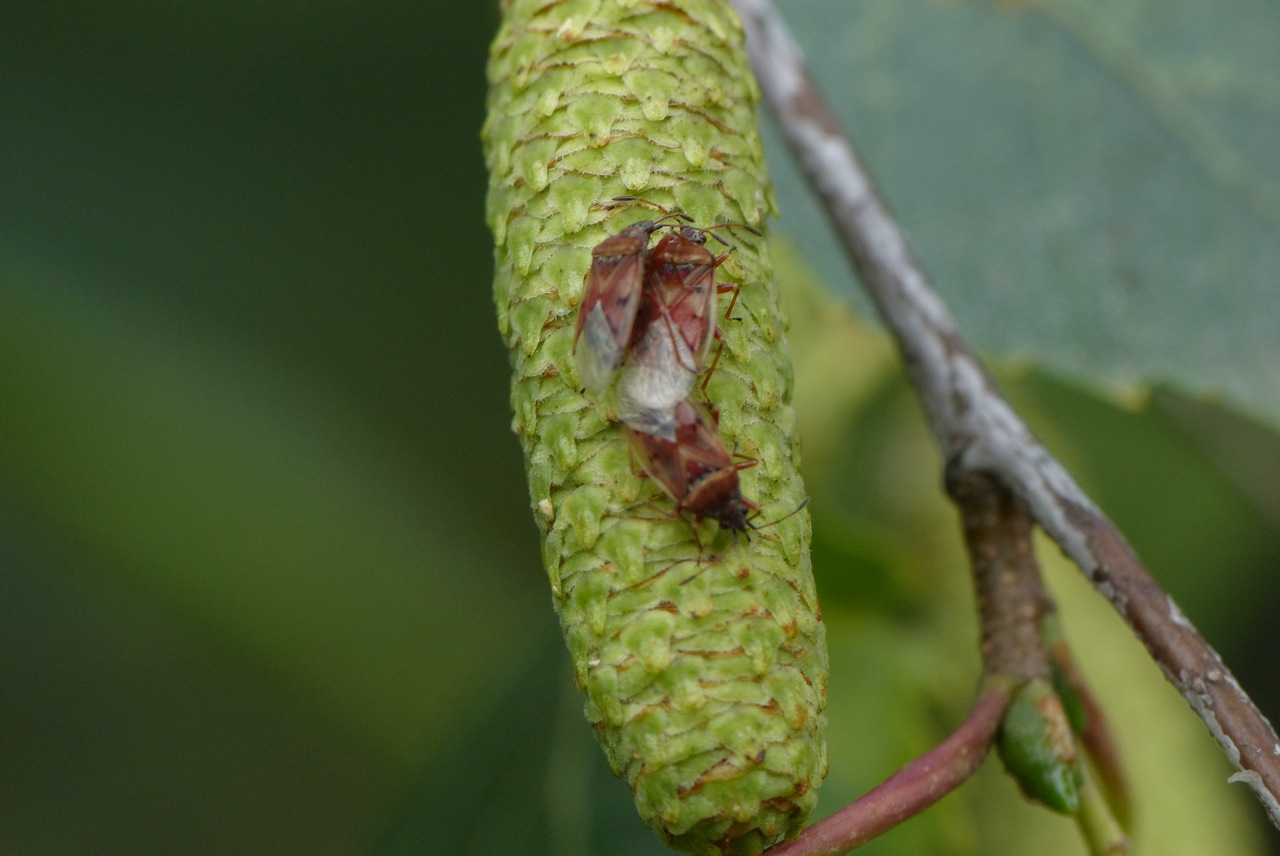
Just above these were mating Birch catkin bugs with an onlooker in very close attendance!

Photograph: Jim Cresswell
As we left this part of the site we noticed a wasp nest on a fence post. Bravely photographers queued up to take a snap!!

Photograph: Jim Cresswell

Photograph: David Williams
Note: No animal or photographer was harmed in taking these photographs.

My thanks to Natural England for granting us permission to do what we enjoy doing on this excellent site and to the photographers Jim Cresswell, David Williams and Les Hughes for letting me use their photographs to illuminate this report.


27 Jun 2017

Where's the castle?

A double-header this week - we had two outings.

Ruewood - Wednesday, 21 June 2017

Ruewood Shropshire Wildlife Reserve is just outside the village of Tilley near Wem. There is normally no parking close to the site but the Reserves Officer at SWT arranged for the local farmer to cut the grass on the entrance track to allow us to park there. I start this report, therefore, with our appreciation for this. It made parking and visiting the site very easy.

Do we have an extra member of the group?


No. The frog took a long look at us as we got ready then meandered off into the undergrowth.

Ruewood consists of two wet pastures and is named after a once common plant, now rare in Shropshire, that grows there - Meadow-rue.


An information board by the site entrance informed us that the plant is found on the old parish boundary which is marked by the line of trees on the above photograph.

So you will have to wait for a photograph as it took us some little time to get there. Entomologists and botanists move very slowly.

By the gate we noticed a cranefly resting on bramble

Tipula fascipennis - Photograph: Bob Kemp
The bramble was also been inspected by a hoverfly

Syrphus sp. - Photograph: David Storey
A sweep of the grass near the entrance found this 

Photograph: Bob Kemp
What is it? Our best guess on the day was a tick. Better inspect ourselves and our clothes after this visit.

At this point one of the group handed me a sweep net with his catch from the pasture. It was full of insects. I borrowed a seat and sat down and spent what felt like the next 30 minutes or so going through it. Feeling sorry for me he brought another net full. Sorry, but this was given much shorter attention. After all, grateful as I am for others collecting things for me, I had come to look at the site.

Yellow flowers seem to be very attractive to insects. Often you will find lots of small moths in the head of a buttercup and this one had attracted a male Swollen-thighed beetle.

Photograph: David Storey
I eventually reached the boundary and looked for the "plant". My first attempt was way off the mark but some guidance from others led me to a large clump.

Photograph: Bob Kemp
The flowers look as though they have already gone to seed but I was assured that that is what they should look like.

Photograph: Bob Kemp
Nearby the snipefly Rhagio tringarius was perched on grass stems

Photograph: Bob Kemp
Lunch was taken in the shade of an oak tree. But first the foliage of the tree was inspected. A spider named Paidiscura pallens was found on the underside of a leaf together with its characteristically shaped egg sac.

Photograph: David Williams
And the more robust method of beating dislodged a recently matured Forest bug (or Red-legged shieldbug if you prefer).

Photograph: David Williams

Remarkably, for a small site, we were still in the first of the two pastures.

Up until then the half dozen or so cattle on the site had remained on the other pasture but eventually they came to join us. However, each group kept themselves to themselves.


We made it to the second pasture! 

Photograph: David Storey
This pasture was similar to the first so it was not surprising that on the whole we found similar things. 

One of the extras we did find was a Southern marsh orchid (so I am told)

Photograph: David Williams
And a Common green grasshopper

Photograph: David Williams
Looking through the photographs that I have been sent I have several of spiders which I have not managed to weave into the web of the narrative so here they are. Unfortunately I cannot name them to species, perhaps some helpful reader will oblige!

Xysticus sp.? - Photograph: Bob Kemp
Theridion sp. - Photograph: David Williams

Araniella sp - deflated after laying eggs - Photograph: Bob Kemp

Spiderlings - Photograph: David Storey

Finally an excellent photograph of a hoverfly living up to its name.

Photograph: Bob Kemp
My thanks to SWT for permitting us to do what we enjoy doing and to the photographers David Storey, David Williams and Bob Kemp for providing many shots to supplement my own.

Pentre Wood - Sunday, 25 June 2017

Summer has been and gone. We were back to leaden skies and cooler temperatures. Half a dozen of us met up in the rain to explore this Woodland Trust wood at Bronygarth. The description on the Woodland Trust website informed us that it was situated on a steep hillside opposite Chirk Castle. But where was the castle? I did not see it as I made my way to the entrance, nor as I descended the path through the wood.


The rain had, naturally, had made everything wet which made my decision not to bring a beating tray seem particularly bad. However, sparing use of my net was possible and later there was a short dry spell which allowed us and the vegetation to dry out a bit before it rained again and we made our way back to the cars.

But I get ahead of myself.

The path down through the wood was flanked by wild garlic. Although the plant had gone to seed the smell lingered. Wonderful.

The wet weather caused us to progress through the wood quicker than normal but we still took time to observe.


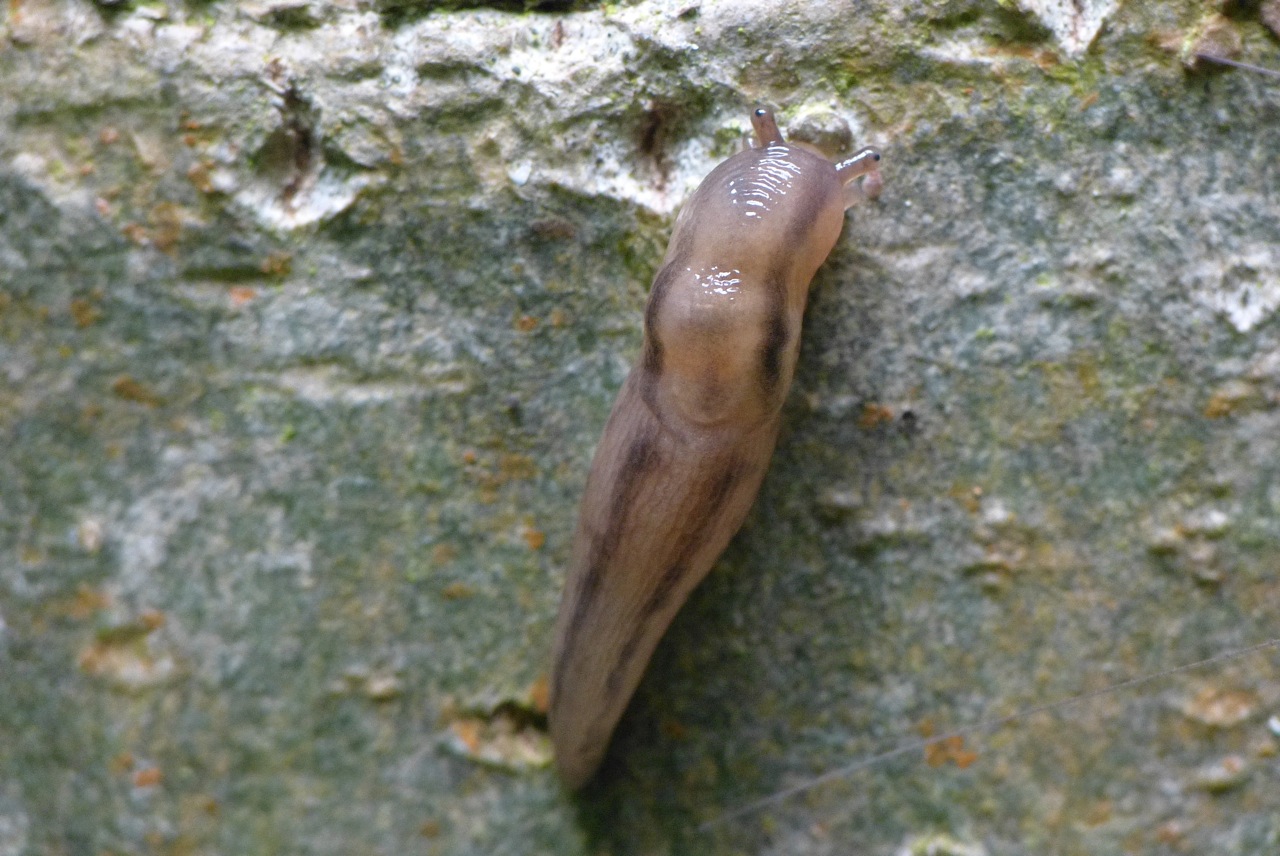
But the weather did not deter certain animals such as this slug

Photograph: Jim Cresswell
It did not stop us looking at galls

Aceria pseudoplantani on Sycamore - Photograph: Jim Cresswell
This long horned beetle Rutpela maculatus did not seem too concerned

Photograph: Jim Cresswell
At the bottom of the wood we came to a meadow at the side of the River Ceiriog.


On the other side of the river is a fish farm which, I assume, is used to stock the river with trout for fishermen to catch and remove. 

We lunched by the river during the dry spell I mentioned earlier.

Photograph: David Williams
A caddisfly posed on a grass stem.

Photograph: David Williams
A nearby tree was beaten and one of the group noticed a small beetle in the tray (not mine - it was at home). We were able to identify it (subject to approval by the beetle recorder) as a male Fan-bearing wood-borer (Ptilinus pectinicornis) - females do not have the fanned antennae.

Photograph: David Williams
We walked on through the field by the side of the river periodically inspecting the trees. On one I found a beautifully marked mirid bug - Deraeocoris flavilinea


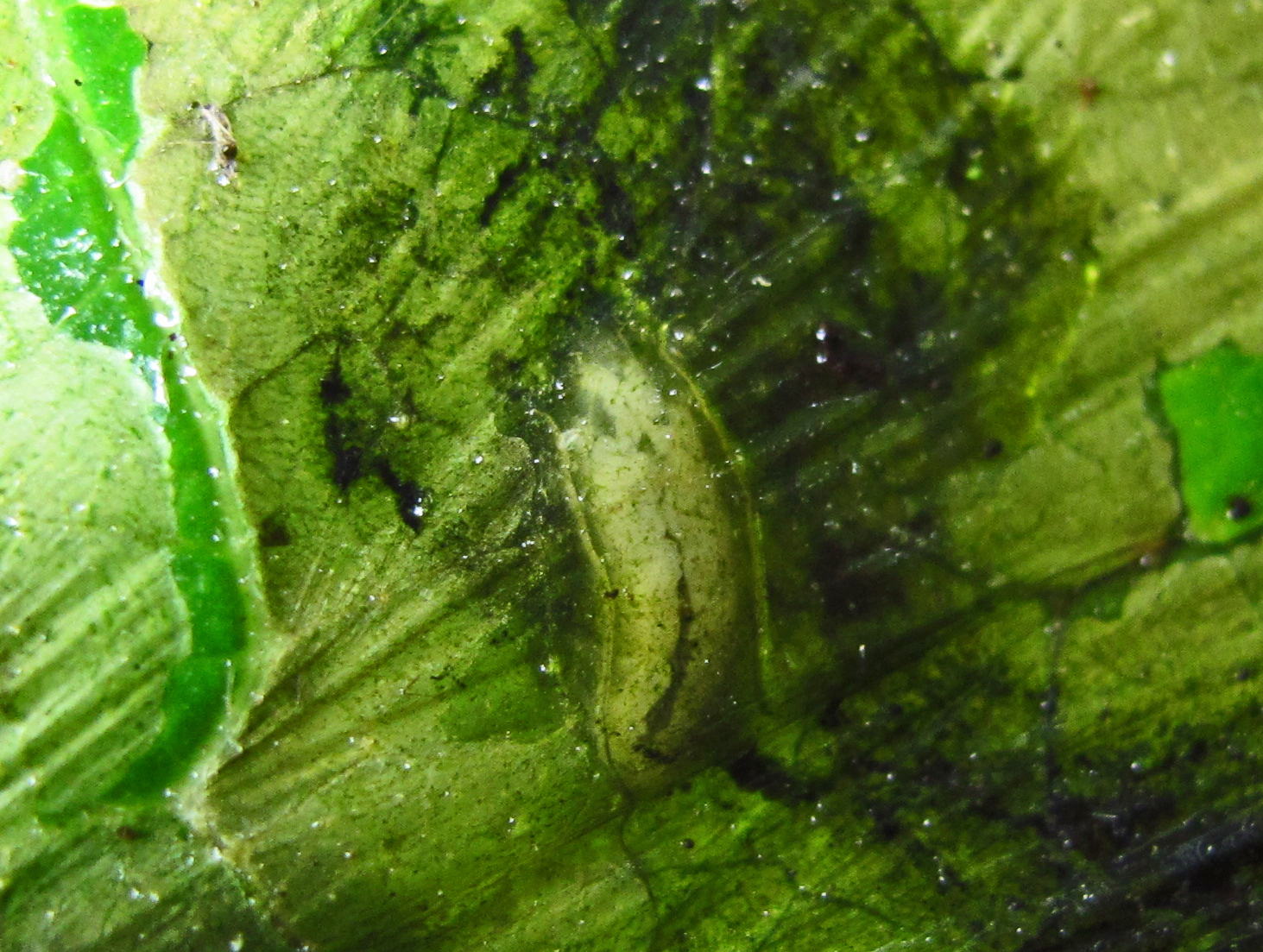
The rain started again. It got heavier. We decided to return, but not too quickly. On the way we noticed some leaves of burdock that had become the home of a fly larva - Pegomya laticornis. The evidence of the flies presence is easy to see!

Photograph: Nigel Jones
And this is one of the larvae that created the leaf mine.

Photograph: Nigel Jones
Then we saw it.

The castle.

Just peeping over the horizon.


Just down the road from where we had parked the cars we had a better view.


My thanks to The Woodland Trust for giving us permission to survey, to the photographers Jim Cresswell, Nigel Jones and David Williams and to everyone who attended on the day for their perseverance. A good site well worth visiting again on a sunny day.