4 Aug 2017

A Tortoise in the tale

Rough Park and Dale Coppice - Wednesday, 26th July 2017

Whilst most of us lucky enough not to have to go to work may have peeped out of the curtains early in the morning, seen the rain coming down heavily and decided to have a lie-in and stay dry, half a dozen of us met undeterred at one of the access points to Rough Park.

The rain had abated by then but everything was soggy. Sweep nets were out of the question as one sweep would result in a useless very wet net. Eyes, beating trays, and towels were the order of the day, though spiderman insisted on taking spidervac.

The short path that we took from the cars to the park was bordered by a line of trees including oak and acers. Eyes came in useful here as we inspected leaves for galls, leaf-mines and, of course, the egg-sac of the sputnik spider - Paidiscura pallens.

Oak is the host for many gall causing insects. Amongst those we found were silk button galls on leaves caused by the gall wasp Neuroterus numismalis.

Photograph: Jim Cresswell
artichoke galls in the leaf buds caused by the gall wasp Andricus foecundatrix.

Photograph: Jim Cresswell
and knopper galls on the acorns caused by the gall wasp Andricus quercuscalicis.


A couple of the group dived into the trees and emerged a few minutes later clasping a huge mushroom - 


This is Boletus radicans. If you bruise the gills they turn blue. As you can see from the following photograph this was tried many times (some may have been natural damage)!


Eventually we made the entrance to the site and made our way along the path through the grassland that is Rough Park.


The grass and trees were still very wet from the rain so spidervac was fired up. Whilst some of us inspected the catch from this device others used their eyes and cameras.

Dingy footman - Photograph: Bob Kemp
16-spot ladybird - Photograph: Bob Kemp
Deraeocoris ruber on knapweed - Photograph: Bob Kemp
Rutpela maculata
Shaded broad-bar - Photograph: Jim Cresswell
Small skipper - Photograph: Jim Cresswell
Hairy shieldbug nymph - Photograph: Bob Kemp
Time was pressing, i.e. it was lunchtime. We headed for a seat which turned out to be close to the entrance to Dale Coppice.


 As shown by the post just beyond the gate in the background of the above photograph


Some sit to eat lunch, some stand and some wander about. One wanderer found a nymph of a bronze shield bug on a bramble leaf


Lunch over we headed into Dale Coppice. The path plunged downwards. We came across several trees covered in fungus resounding in the evocative names Dryad's saddle, lumpy bracket and dusky bracket.


Lumpy bracket is lumpy but it is often covered in a green algae as it is here


On through the coppice we meandered until we came to a lane. Following the lane along the edge of the wood we came across the newest habit to grab our interest.


Vegetation in the middle of the road! Someone has to do it.

Our travels through the county take us along many minor roads where lack of regular traffic and the accumulation of soil allows grass and other plants to grow in the middle. Often there is just a hint of green but sometime there is short grass and very occasionally longer grass and other vegetation. As we drive along these roads our thoughts wander to "What lives there?" Well, there is only one way to find out and that is to look.

This was our first try. Spidervac was employed on the above patch and several others. We had results! Spiders (not sure which species they were) and a ground bug Drymus brunneus. I have know added this habitat type into my records! I look forward to more opportunities to investigate. If you know of this habit near you let me know.

Pressing on we followed the lane to its end, then a path which opened out onto Rough Park. Looking around this area we found the labyrinth spider Agelina labyrinthica

Photograph: Bob Kemp
Here is something closer to an insects view of the spider

Photograph: Bob Kemp
The heavens opened. We were as far as we could be from the cars so we sought shelter.

The rains stopped. We made our way into the patch of heathland in the middle of Dale Coppice.

Photograph: Bob Kemp
The magnificent Royal fern inhabits this heath.

Photograph: David Williams
The heath is on quite a slope but we managed to stumble to the bottom where we set up camp and then went about exploring the area.

A snail-killing fly, Coremacera marginata, was spotted and photographed.

Photograph: Bob Kemp
A common green grasshopper was tracked down

Photograph: David Williams
Someone noticed a blue bug nymph which was feasting on what looks like a sawfly larva.

Photograph: David Williams
A further shieldbug grabbed our attention. Actually our spiderman grabbed the bug! A small grass bug nymph. As you can see its treatment caused it no harm.

Photograph: David Williams
Time to return to our cars.

We clambered out of the heathland the way we came and as we were crossing the grassland to get to the path our orthopterist with much younger ears than most of us - and a bat detector - announced that he could hear Roesel's Bush-cricket.

"Shall I try sweeping for it?" asked the Great Stick Finder (see "A Forgetful Day" - 7 May 2014).

"Yes."

So he swept.

He did not find the bush-cricket but he did find this

Photograph: David Williams
A tortoise shieldbug. What a find. I was beside myself.

It can be found in the Wyre Forest but apart from one record from Dolgoch Quarry a couple of years ago it has never been found (to my knowledge) anywhere else. It has now cropped up in Telford. It must be elsewhere, so please keep a look out for it.

By the way the sun was shining by the end of our outing.

My thanks to Severn Gorge Countryside Trust for permission to survey in Dale Coppice, the photographers Bob Kemp, Jim Cresswell and David Williams for allowing me to share their photographs and those who braved the weather to make this another memorable day.


30 Jul 2017

This is a true story

"Bagbatch", All Stretton - Sunday, 23rd July 2017

Arriving for our second visit to this site this year we were met by two moth trappers. They had trapped the night before and had just finished going through the catch. Thus, the first 10-15 minutes was taken up by looking at what they had found.

Inspection over we got ready and eventually we left the car parking area. On our last visit we took a circular route around the site in a clockwise direction. So, this time, for a change we started out on a similar route but anti-clockwise. You cannot say we are not adventurous.

We walked about 40 yards into the first meadow then set up camp there staying for about the next 45 minutes. We set a fast pace.

Photograph: David Williams
An early find in the bramble at the edge of the meadow was a mid-instar Green shieldbug nymph.

Photograph: Jim Cresswell
A beautiful male Southern hawker was close-by posing on the emerging bramble fruits.

Photograph: Jim Cresswell
And on some water in the vicinity a pondskater provided a wonderful subject on which to practice photographic skills.

Photograph: David Williams
Pretty impressive - and no need for Photoshop.

Having scoured the field and its surrounding vegetation I realised that if we did not move on

1) We could be having lunch within 40 yards of the cars;
2) We would never get around the site.

We moved into the next meadow which was smaller, wetter and with a good variety of vegetation of different heights.


A male red-tailed bumble bee was feeding on an umbellifer head

Photograph: Jim Cresswell
Knapweed in this area was proving particularly attractive to the tachinid fly Prosena siberita.

Photograph: David Williams
These reports rarely include any photographs of flies other than hoverflies and craneflies so I am pleased to be able to include this one and a few others that will follow. Flies are all around us and, although sometimes unwelcome such as horseflies and mosquitoes, make up a major part of the fauna and should be enjoyed.

A couple of other finds to report, then .... guess what? 

A comma proudly displaying its comma marking on the underside of the hind wing.

Photograph: Jim Cresswell
And a harvestman Nemastoma bimaculatum.

Photograph: David Williams
Have you guessed?

It's not hard.

Lunch


Satiated we moved on. We still had about 90% of the lap to go.

We entered an area of longer vegetation and woodland as the path bordered a stream. Of passing interest were the long-horn beetle Rutpela maculata.


This is a regular in these reports and is always a delight to see.

Another fly! And another tachinid - Macquartia praefica.

Photograph: Nigel Jones
And a cuckoo bee - Bombus barbutellus

Photograph: David Williams
The hymenopterists in the group got quite excited by this find, so I assume it is unusual to see it in these parts.

Cuckoo bees follow the example of the bird they are named after, that is, they take over the nests of other bumble bees. This cuckoo takes over the nest of the Garden bumble bee Bombus hotorum.

At this point I saw a plant that I thought was cowwheat, so the heavy gang were called in to look for the Cowwheat shieldbug


The shieldbug was not found.

Not surprising really, the plant was greater stitchwort!

A new member of the group wandered down the path.


It joined us as we ascended through the woodland to the next meadow then decided it had had enough and settled down to rest.

Emerging from the wood we entered a wonderfully flower rich meadow with glorious views of the hills


This area held our attention for most of the afternoon.

What about the rest you may ask?

Well, there is always another day.

Our dipterist was especially pleased about a fly that one of the group had found.

"A very interesting conopid" I think he said.

It was. It was a nationally scarce fly that had not been recorded in Shropshire for over 30 years - Thecophora fulvipes.

Photograph: Nigel Jones
Small coppers were flitting about and one took a fancy to the picture of an Eyed hawkmoth on the front of an identification guide

Photograph: David Williams
Also found in this area was the picturesque micro-moth Agapeta zoegana.

Photograph: David Williams
Will you be surprised if I said that time was pressing?

It was, so we moved on swiftly through the next field, pausing only to look at a dead tree and a centipede.

Photograph: Jim Cresswell
We were about to enter the wood on our last part of the journey when a cry of "Purple hairstreak" was heard from one of the tail-enders. So we all trooped back to look

Photograph: David Williams
It was not camera shy and although it fluttered about a bit it always stayed within easy sight.

One last fly. I am not sure where this was seen but the timing of the photograph is after the one above. This one is a robber fly - Machimus atricapillus.

Photograph: Nigel Jones
We raced back to the cars only to be offered refreshments by our hosts.

How could we refuse?

So we didn't.

As we enjoyed our drink our orthopterist investigated the compost heap to look for little earwigs which ply their trade in this environment. He was not successful, but he found a pseudoscorpion which turned out to be the "Compost chernes".

My thanks to Mags Cousins for inviting us to the site, to the photographers David Williams, Jim Cresswell and Nigel Jones for generously allowing me to use the results of their craft and to the group for once again providing excellent company as well as spotting lots of interesting wee beasties.

What has the title of this piece got to do with the rest you may wonder?

If you have seen the film "Fargo" and its spin-off TV series you will know it starts "This is a true story" "The events happened in Minnesota in ..." This is untrue, it is not a true story although it may be tenuously based on some event somewhere in the world.

Well this report is a true story based on events that happened at Bagbatch on Sunday 23rd August. The key word is "based". I am the grateful recipient of photographs from attendees but am not always aware of where and when they were taken on the trip so I try to put together a plausible tale from what I remember and the photographs. 

I hope you enjoyed it! 

23 Jul 2017

On the beach

Ternhill Quarry - Wednesday 19 July 2017

Last year I was informed about a disused sand and gravel quarry at Ternhill. Visits were invited to assess the restoration work that had been done and to gather records of the species that had colonised the site. I did not have time to go last year but was able to schedule a Joy of Wildlife day there this year.

Permission was arranged with the quarry operators via Shropshire County Council and off we went.

Nine of us made the journey to the quarry which is situated just north of Hinstock on the A41. After parking and getting ready we climbed (or went through) the gate that marks the entrance to the quarry to be greeted by a large green metal construction, an avenue of birch trees and vast bowl of gravelly sand with a large pool at its centre.


In places the vegetation was well established, especially around the pool, but other areas were more like a beach. The hot sun blazing down at the time of our arrival accentuated this feeling.

A quick exploration of the site found half of the site fenced off with a stark "Private" notice posted on it. This was a surprise as I understood that the quarry operators had not yet handed the land back to the owners. Never mind, there was still plenty to look at.


Evening primrose was a very common plant in the sandy areas but there was plenty of other flora to challenge the botanists among the group.


There is very little more to add. We scoured the beach, the poolside vegetation, the areas of more mature vegetation and the trees that bordered the site. I will now hand over to the photographers to show you some of the things we found.

We start with an insect that does not often appear in these reports. Ants. No-one has told me what species they are but I am sure somebody will.


Photograph: Bob Kemp
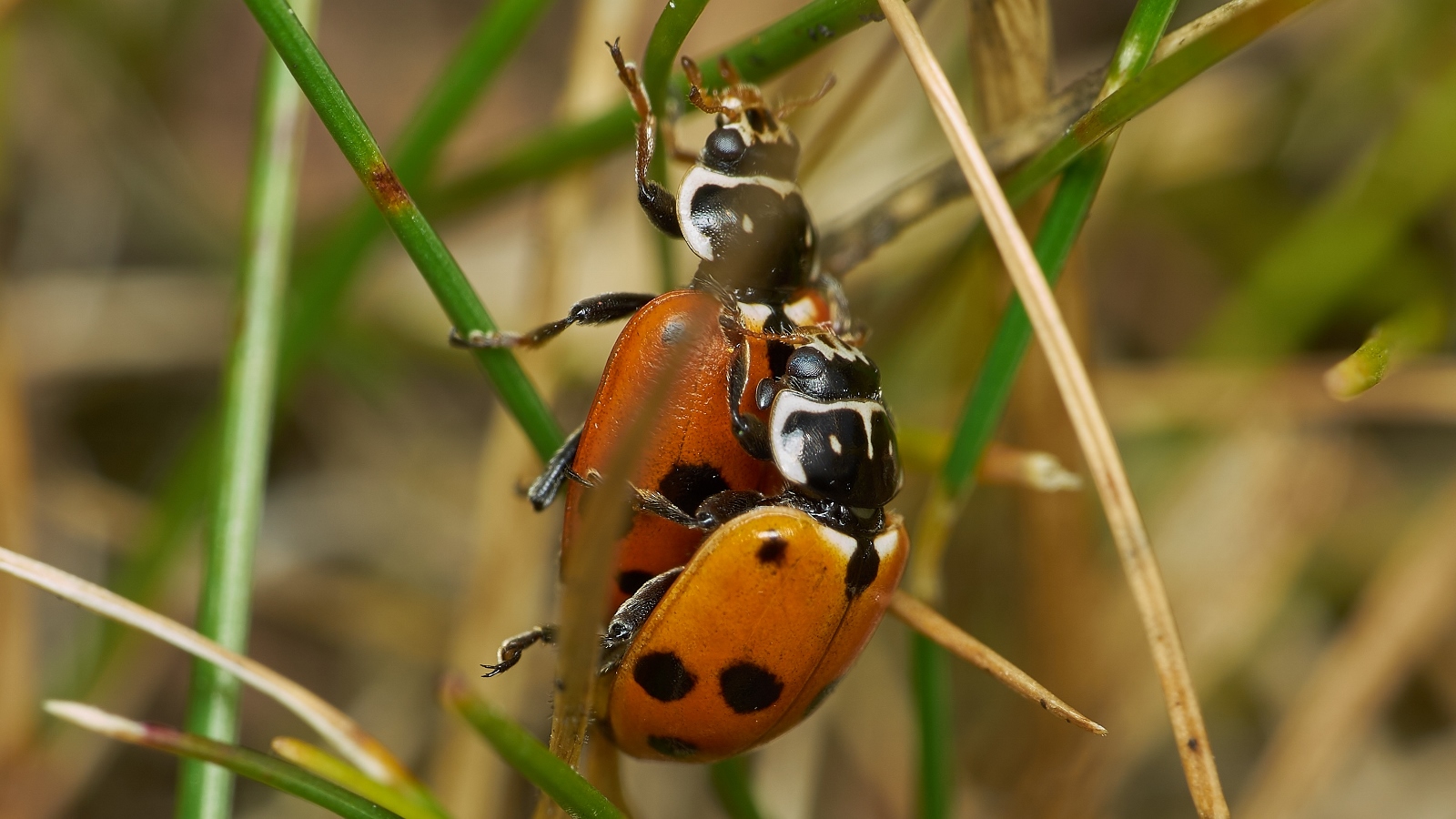
A pair of Adonis ladybirds intent on perpetuating the species

Photograph: David Williams
A pair of blue shieldbugs with the same purpose.

Photograph: Bob Kemp
A freshly emerged common blue damselfly by its exuviae

Photograph: David Williams
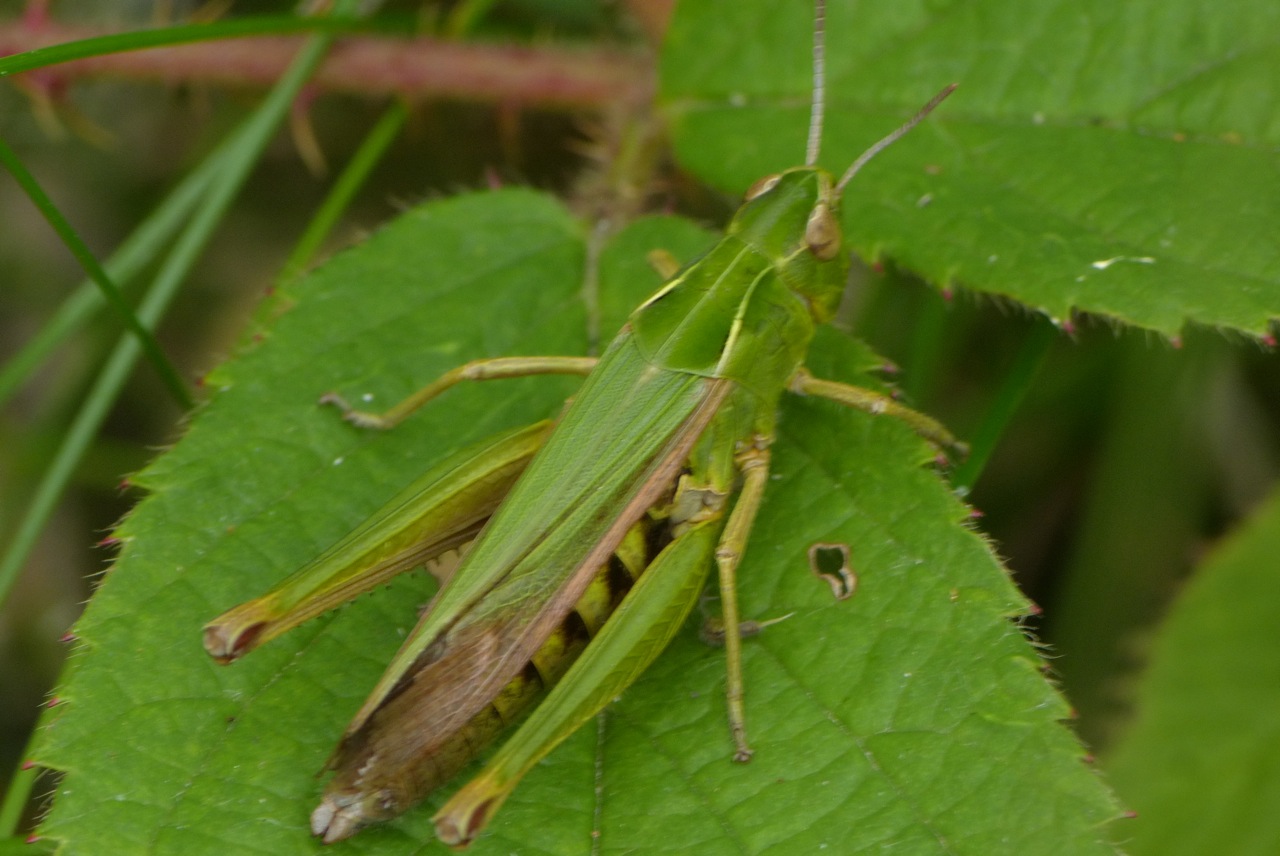
A common green grasshopper.

Photograph: Jim Cresswell
A common groundhopper. The blue circle is there to highlight the fully-formed (but non-functional) forewing - this indicates that it is an adult.

Photograph: David Williams
A late instar nymph of the rhopalid bug Corizus hyoscami.

Photograph: David Williams
A hoverfly - Eristalis interruptus

Photograph: Jim Cresswell
A gatekeeper.

Photograph: Jim Cresswell
A mid-instar nymph of a green shieldbug.

Photograph: Jim Cresswell
A pair of rhopalid bugs Myrmus miriformis following the example of the Adonis ladybirds and blue bugs.

Photograph: David Willaims
The soldierfly Oxycera rara - careful, or I may get drawn into using the rather silly common name for this.

Photograph: Bob Kemp
A rather battered and bruised ringlet.

Photograph: Jim Cresswell
A frayed small copper.

Photograph: Jim Cresswell
There was only one blot on an otherwise excellent day on an excellent site. A neighbour came to find out what we were doing - no issue with that. He then complained that we had left the gate to the entrance drive of the quarry open - a fair cop - we had, I went to shut it. Finally he complained that we had trespassed across his land to get to the site - I have no idea if we had, but if we did, I apologise - I was not made aware of this issue by either the council or the quarry operator.

The weather forecast had promised thunderstorms by mid-afternoon so when the clouds began to darken and threaten we made our way home. 


The thunderstorm did not materialise.

My thanks to Shropshire County Council and Cemex for granting us access to do what we enjoy doing and to the photographers Bob Kemp, David Williams and Jim Cresswell for providing the excellent photographs.