skip to main |
skip to sidebar
Nant Mawr Visitors Centre - Wednesday 27th July 2016
We ventured into north west Shropshire to the Nant Mawr Visitor Centre near, surprisingly, Nant Mawr. This is the site of the Tanat Valley Light Railway which serviced lime kilns, the remains of which can still be seen on the site.
 We arrived to find a contractor on site. He was using a large JCB to ferry soil that had been removed from the front of the kilns to the "platform" area where the said structure was being built. We pledged to keep out of his way; he was bigger than us with considerably more power at his disposal.
An attraction throughout the day, as we passed it and rested by it several times, was a Buddleia bush. Not only was it attractive to us.

It was also a food stop for several butterfly species which, of course, in turn increased its attraction to us.
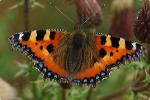
 A couple of us spent quite a while trying to get a photograph of the Red admiral's underside as this is equally as attractive but not, to me anyway, instantly recognisable. This is the best that I could manage.
 We visited the site last year in May and the railway verge by the car park was full of life as the vegetation was thick and tall; we spent a lot of time inspecting it. This year it had been cut so providing us with plenty of time to explore other areas, especially the Buddleia!
The site consists of the railway track, verges and the kilns.These are bordered by a small meadow, woodland and a larger area of grassland. Tearing ourselves away from the butterfly bush we made our way through the woodland to the meadow.
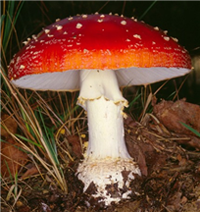
The meadow had plenty of self heal and white clover and there were the remnants of common spotted orchids. From the meadow we descended down a fungus strewn path back to the lane at the side of the railway track.

I was summoned to my car. A Silver-washed fritillary had been observed taking on substances from my tyres. Needless to say it was no longer there when I arrived, but I did see a large butterfly of an orange hue fluttering into the surrounding bushes.
Some of the bushes were draped in clematis.

A coffee break was taken ... by the butterfly bush.
A couple of us took a look at the area by the kilns. There was a small pool where a Large red damsel fly and Common darter were sparring for the territory.
I tried to get closer to the kilns so attempted to skip across the rails. Unfortunately the ground between the rails turned out to be very gluey. I put my foot down; pulled it up; left my wellington behind stuck in the gloop; overbalanced; descended to the ground in an undignified manner; stood up and dusted myself down. To retrieve my wellington I had to put my unbooted foot down in the water - result a wet and dirty sock and foot. Still no harm done apart from to my pride. Fortunately no one recorded the event.
Was it worth it? Not really. I returned by a drier route!
Our next stop was the field where we made use of the picnic tables to eat our lunches, swap tales of derring do and, as generally happens, talk about cameras, focal lengths, depth of fields etc., etc. The sheep looked on briefly then continued to mow the grass.
 Lunch over we made for the tracks, the surrounding verges and the rolling stock.
A few Cinnabar caterpillars were seen on the ragwort.
 We continued to observe, rest, walk along the tracks, rest, inspect the rolling stock, rest, find the end of the line, rest and generally enjoy being on the site.
 Once again we sought the refuge of the butterfly bush before returning to our cars and home.
A baker's dozen? Yes, here they are:
Small skipper
Holly blue
Small copper
Small tortoiseshell
Silver-washed fritillary
Small heath
Peacock
Speckled wood
Comma
Gatekeeper
Red admiral
Large white
Green-veined white
Dothill LNR, Friday 29th July 2016
Four of us met on a grey but dry day for our fourth visit to this newly declared Nature Reserve. Without ado we headed for the meadow at the side of Tee Lake. On the way we passed a Meadow brown feeding on the head of an umbellifer.

We have visited this meadow on each of our visits and it has been fascinating to watch it change in that time from early promise in our April visit, its growth in May, in full flower in June and now going to seed with patches of knapweed, ragwort and hogweed providing the main floral interest.

Another attraction of this area is a seat where you can sit and study a plant or invertebrate to determine what it is; have a drink; chat with passers-by or just take a break.
 Dothill is a large site and there are still a few areas that we have not visited. Rather than march to one of these we used the cars to get us there quickly. Our target area was an area of rough grassland to the south west of the site.

One of the issues facing the nature reserve is Himalayan balsam. I know the Friends group have been tackling the issue but the entrance to this part of the site reminds you of the threat of this very attractive but invasive species.

The area proved to be quite a productive area for us so we pottered around it for a couple of hours before deciding to call it a day. Just as we got back to the cars the rain started!
Where does all the time go? Somehow the days have slipped by and I find that I am three reports behind. Two reports are included here; I will include the third with the report of our next outing.
Poles Coppice - Wednesday 20th July
Poles Coppice is a woodland which contains quarries. The quarrying has ceased a some time ago and "nature" is now reclaiming the land.
Seven of us met in the car park to the south of the site a couple of miles or so east of Ministerley. This required us to walk a little way to the site.
On the way we noticed a Gatekeeper out in the sun.

And in a puddle flies were displaying by waving their wings about. These were the easily recognised dolichopid flies Poecilobothrus nobilitatus whose white wing patches are quite distinctive.
 Usually the walk would take about a hour but somehow most of us entered into the spirit of the venture and ignored most of the distractions on the way including the excellent view.

And the sighting of a longhorn beetle Rutpela maculata on a bramble flower.
 We entered the site and came into a small damp area. This was checked out but nothing significant was found. We then followed the path through the woodland as it crossed stream and gained height. Unfortunately the ground flora was rather mundane and most of the trees branches were out of reach so progress was rapid.
We came to a point where there was the choice of three paths. We consulted maps but the multitude of footways were not shown. Which one to take? If in doubt, straight down the middle; so we took it.
The path brought us to the high end of one of quarries. This was beautifully fenced off to allow you to look in but prevent you accidentally falling in.
We entered the site and came into a small damp area. This was checked out but nothing significant was found. We then followed the path through the woodland as it crossed stream and gained height. Unfortunately the ground flora was rather mundane and most of the trees branches were out of reach so progress was rapid.
We came to a point where there was the choice of three paths. We consulted maps but the multitude of footways were not shown. Which one to take? If in doubt, straight down the middle; so we took it.
The path brought us to the high end of one of quarries. This was beautifully fenced off to allow you to look in but prevent you accidentally falling in.

What we saw looked very interesting but we would have to be patient until we had descended to the level of the quarry floor.
On the other side of the path was a second quarry. Here any chance of an accidental fall was prevented by a sign.

We found a large patch of cow wheat. This initiated a frenzied but unsuccessful search for the cow wheat shieldbug, a bug that has, to date, only been found in the Wyre Forest in this county.
By the time we had descended it was time for lunch and we located some picnic tables at which to eat our provisions in relative comfort.
After lunch we attempted to enter the quarry but were prevented by a large pool cunningly placed at its entrance. Waders were required to get in. Several unsuccessful attempts were made to skirt the pool before we reluctantly moved on.
The path we took did not yield a great deal but it did take us to a large quarry. The centre of the quarry was clearly a meeting point as a circle of stones had been laid out to provide a resting place for weary travellers.

But you had to be on you guard in case the giant with the big net came to catch you!
The stones were also useful for providing a stable base for inspecting the contents of your net.

We spent a good while in the quarry which was a mixture of dry grassland and very wet scrub and woodland. Eventually it became too hot and oppressive so we moved on.
The path brought us to the edge of the coppice and deposited us in a field. There was a roll of thunder. Although it was not threatening we decided to call it a day. We made our way back promptly, but not so promptly that we could not be distracted. We watched a brown hawker patrolling its patch and a Forest bug descended into my tray from a hawthorn bush.

We heard no more thunder and it did not rain. An enjoyable day was concluded in a local hosterlry - to replace lost fluids, of course.
Lightmoor LNR, Sunday 24 July
All my planning for car parking was thrown into disarray when I found a lorry parked in the parking area.

With some careful positioning we managed to fit everyone in. Then one driver who was parked at the back of the lorry decided to move in case the the lorry needed more space, a sensible thought. As he was manoeuvring a car came the other way. The occupants were not best pleased to have to wait a few seconds whilst the car reversed out of their way. "Patience is a virtue...." but not for some Lightmoor folk.
Nine of us set off. Well eight of of the goup did as we had a non-arrival. I waited a while then wandered down to the main road to check for anyone looking lost. When I got back to the car park a fork lift was unloading a pallet from the truck. The driver did not seem concerned about our presence but as he left he clipped the back of the lorry.
I pursued the group and suggested we move some of the cars as the forklift driver may be less careful with our vehicles next time.
So after a bit of a stuttering start we made our way up the footpath through the woodland. A search of some enchanter's nightshade produced sightings of the nymphs of the stiltbug Metatropis rufescens.

The woodland path turned into a narrow fenced path between a garden and a field. Along the edge we came across some chicory.

We crossed the road to try the path that the Wrekin Forest Volunteers had worked on a couple of years earlier only to find it impassible. We turned back and headed towards the meadow. Progress was rapid. I got left behind as I beat a few trees and swept the roadside vegetation. We passed another area where the volunteers had planted trees. It had scrubbed up and it was difficult to spot the saplings we planted amongst the bramble and bracken.
Eventually I caught up with the group as they were entering the meadow. It was created a few years ago by strewing the existing field with green hay. Since then it has developed very well.
Unfortunately it had been cut the week before robbing us of seeing it in its full glory, but a good margin had been left providing us with a glimpse of what it had been like. We spent the rest of the day looking at this border.

There were plenty of green shieldbug nymphs about

And a labyrinth spider made use of the dense tall vegetation.

As did a couple of amorous common froghoppers.

Both species of the "smaller" orange skippers were present. Small skipper:

And Essex skipper, which was first officially recorded in the county only a couple of years ago but now seems to be quite established.

The unmistakable mirid bug Oncotylus viridiflavus was found on its foodpalnt which is knapweed.

In amongst all this inspection of the field margin we did find time to sit down and enjoy lunch and a few of us inspected the pool that borders the meadow. Another area in which we have worked as volunteers.
The vegetation around the pool was very tall and dense but there were some pathways where someone or something had gone before, making progress a little easier. It was worth the effort as I found a couple of planthoppers that had been recorded only a few times in the county.
Back to the meadow where a couple of "picture wing" flies were attempting to produce the next generation.

I believe the flies are the species Chaetostomella cylindrica, another specialist of Knapweed.
As we approached the end of another day someone mentioned that they had seen a glimpse of a Purple hairstreak in an oak tree. So several of the group had to sit down and see if they too could spot this butterfly.
 We bid farewell to the meadow and returned to the cars. The lorry had been unloaded with no damage inflicted to those cars that had remained.
My thanks to Jim Cresswell, Maria Justamond and David Williams for allowing me to use their photographs to supplement my efforts.


 .
.


 Posts
Posts