Wednesday 7th May 2025, Crose Mere
Please do not be put off by the title. All will be revealed by reading on.
 |
| Photograph: David Williams |
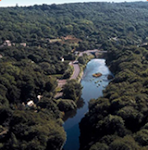
The outing to Crose Mere was greeted by very warm, calm, sunny weather. We spent most of the day exploring a short section of the vegetation at the edge of the mere, most of which can be seen on the above photograph of the mere, from the land in the foreground, round the lefthand edge to the clump of trees.
The good news is that the combination of the warmth, calmness and damp habitat seemed to bring out a large number of invertebrates.
The even better news is that I have lots of photographs to share.
So. I will restrict my rambling to the bare necessities then focus on the pictures.
On reaching the mere we were met by a tree in the water telling us it was private property and that we should not swim or trespass. I assume that the notice referred to the whole site and not just the tree!

We got down to business.

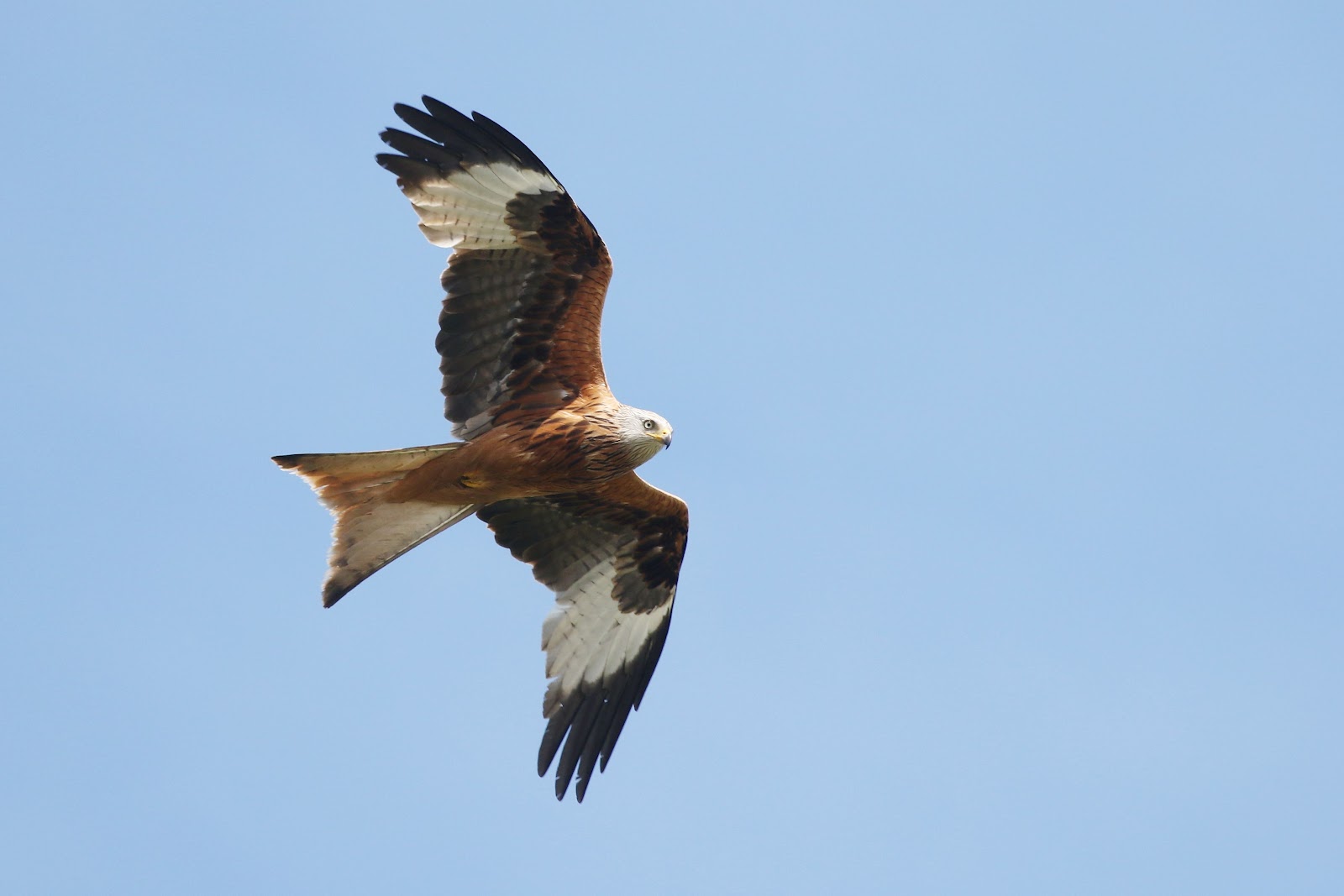
During the day were accompanied by a Red kite, something that seems to happening more often as they appear to prosper in the county.
 |
| Photograph: John Martin |
Pausing for lunch we noticed how calm the upper atmosphere was by the persistence of the vapour trails left by passing aircraft.

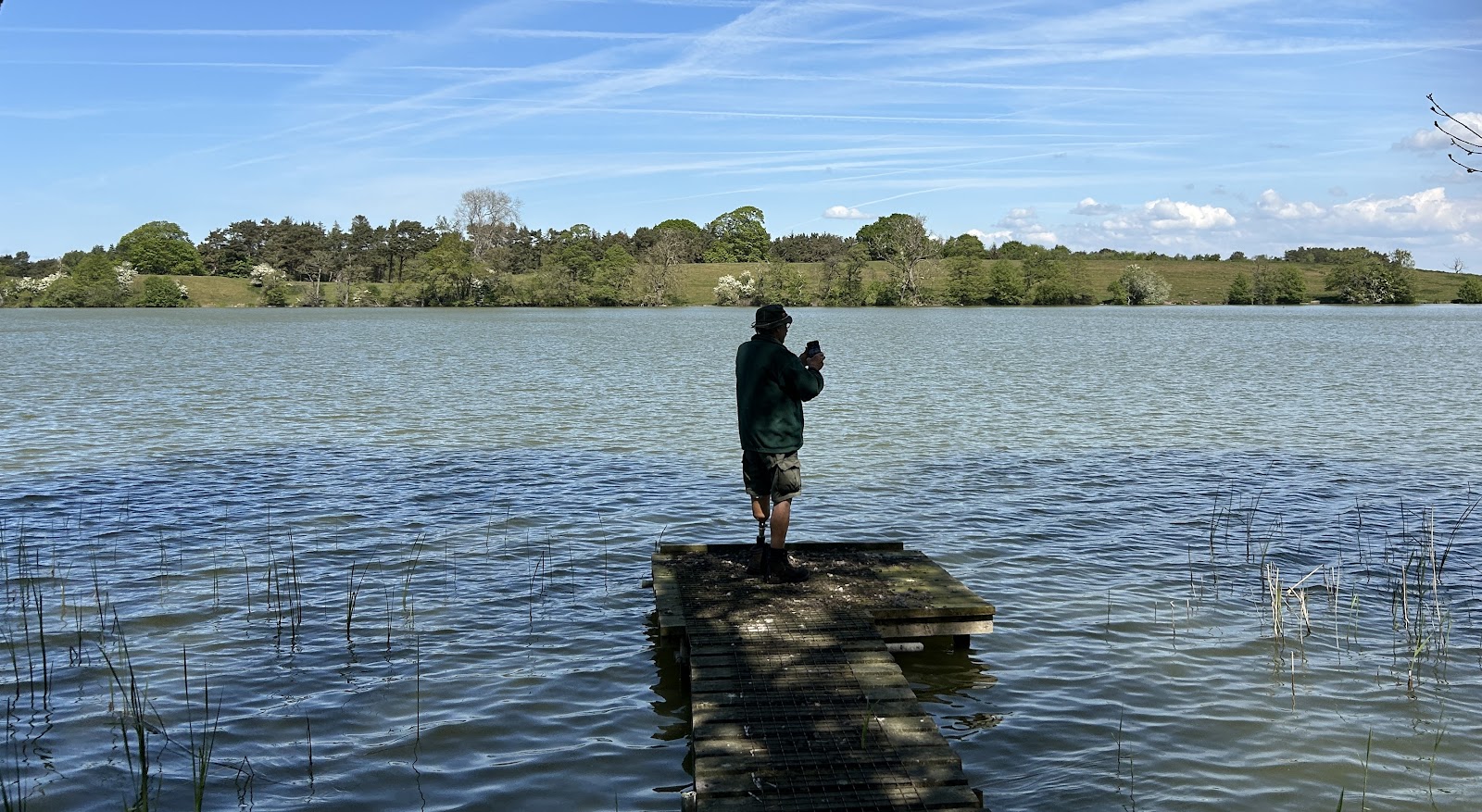
And one of the group paused for a memento of the visit.
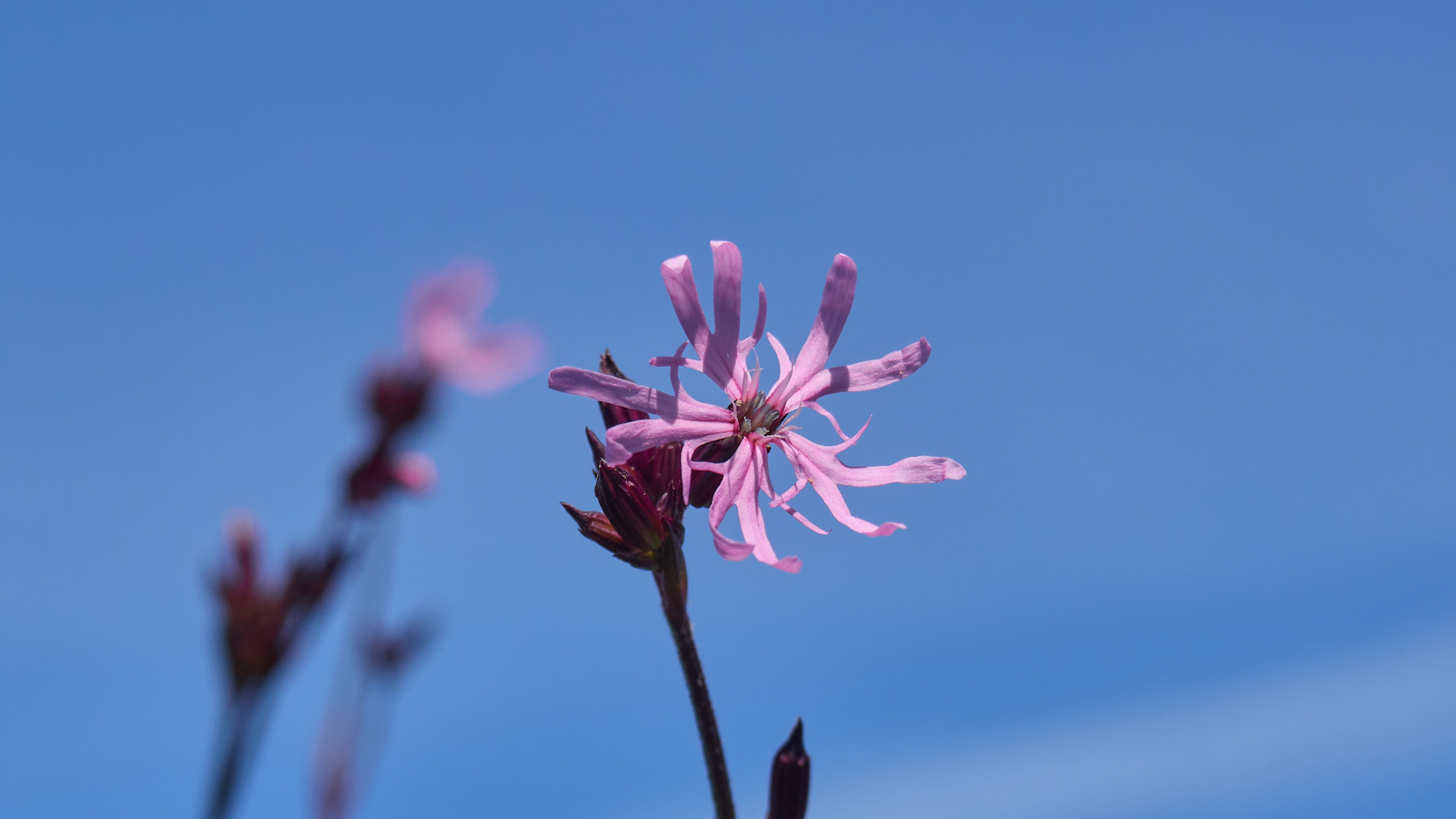
As an antidote to all the photographs of the animals we found, here is some Ragged Robin.
 |
| Photograph: David Williams |
As the day drew to a close, a patch of altocumulus clouds cloaked the sun.
 |
| Photograph: Nigel Cane-Honeysett |
OK. Back to the title.
Towards the end of the day, we found this at the water’s edge.
 |
| Photograph: David Williams |
Immediately it was christened Mr Blobby. We are not too imaginative.
But what was it?
Our best guess was an egg mass.
But what species?
Chief suspect was a Caddis fly.
It was taken home by one of the group to try and “grow it on” to see what emerged.
Here is the first report of progress:
“Blobby's Blob Blog #1
“Doing a bit more research it seems that there are only 2 species of caddis in the UK with such an egg mass- Glyphotaelius pellucidus being the most likely. (The other species is restricted to blanket bogs in the Scottish Highlands.) The egg mass also goes by the rather charming name of 'tree snot'. It seems that when the eggs are due to hatch the egg mass drops into the water.
“This all seems to fit but any other ideas are welcome.
“You will be pleased to know that the egg mass, aka Mr Blobby, which is presently in a small jar in my kitchen, appears healthy but there is no sign of hatching yet.”
And now, what you have all be waiting for…
The pictures.
Craneflies
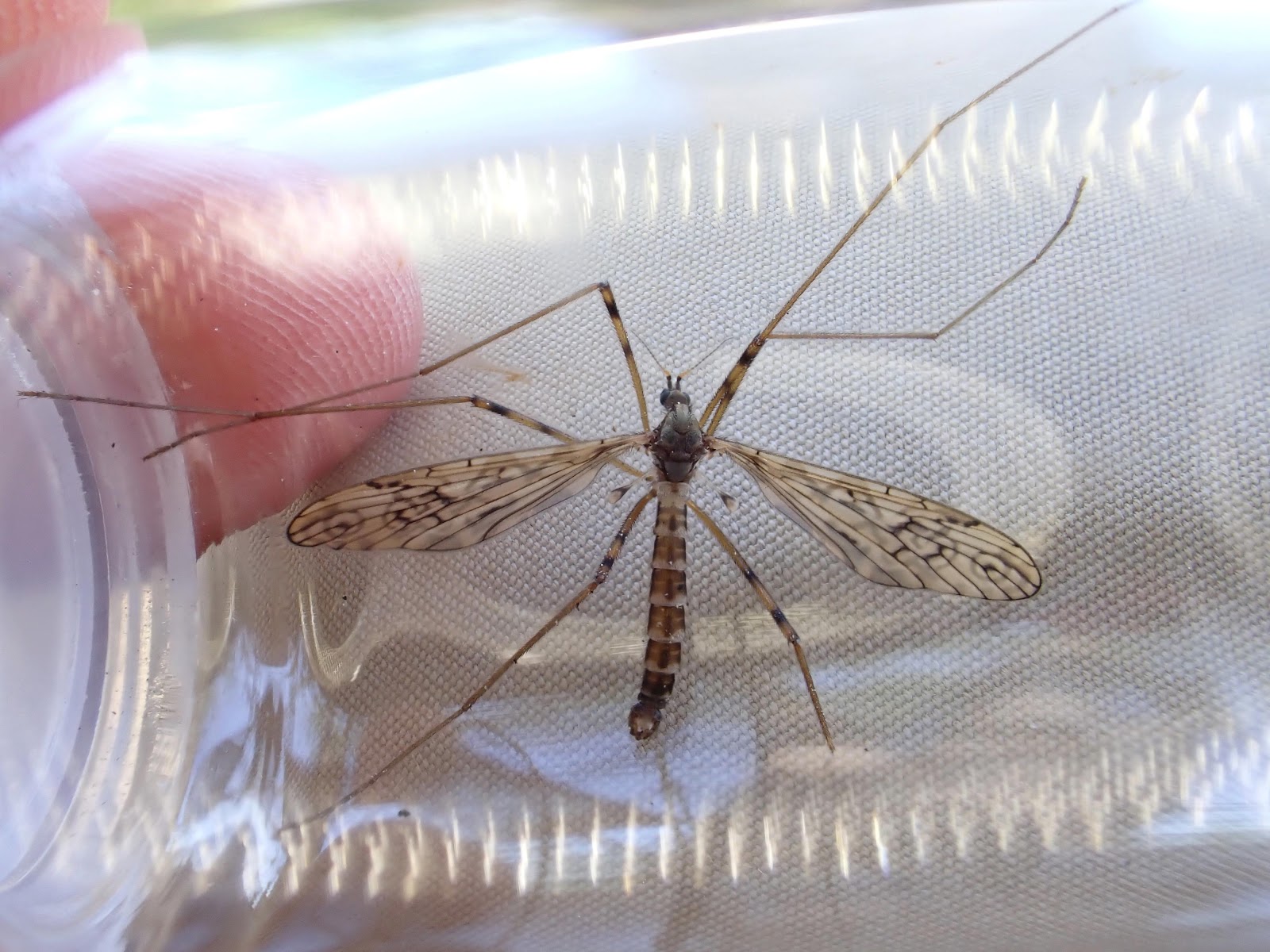
Epiphragma ocellare – recognisable by the circle pattern on its wings.
 |
| Photograph: John Martin |
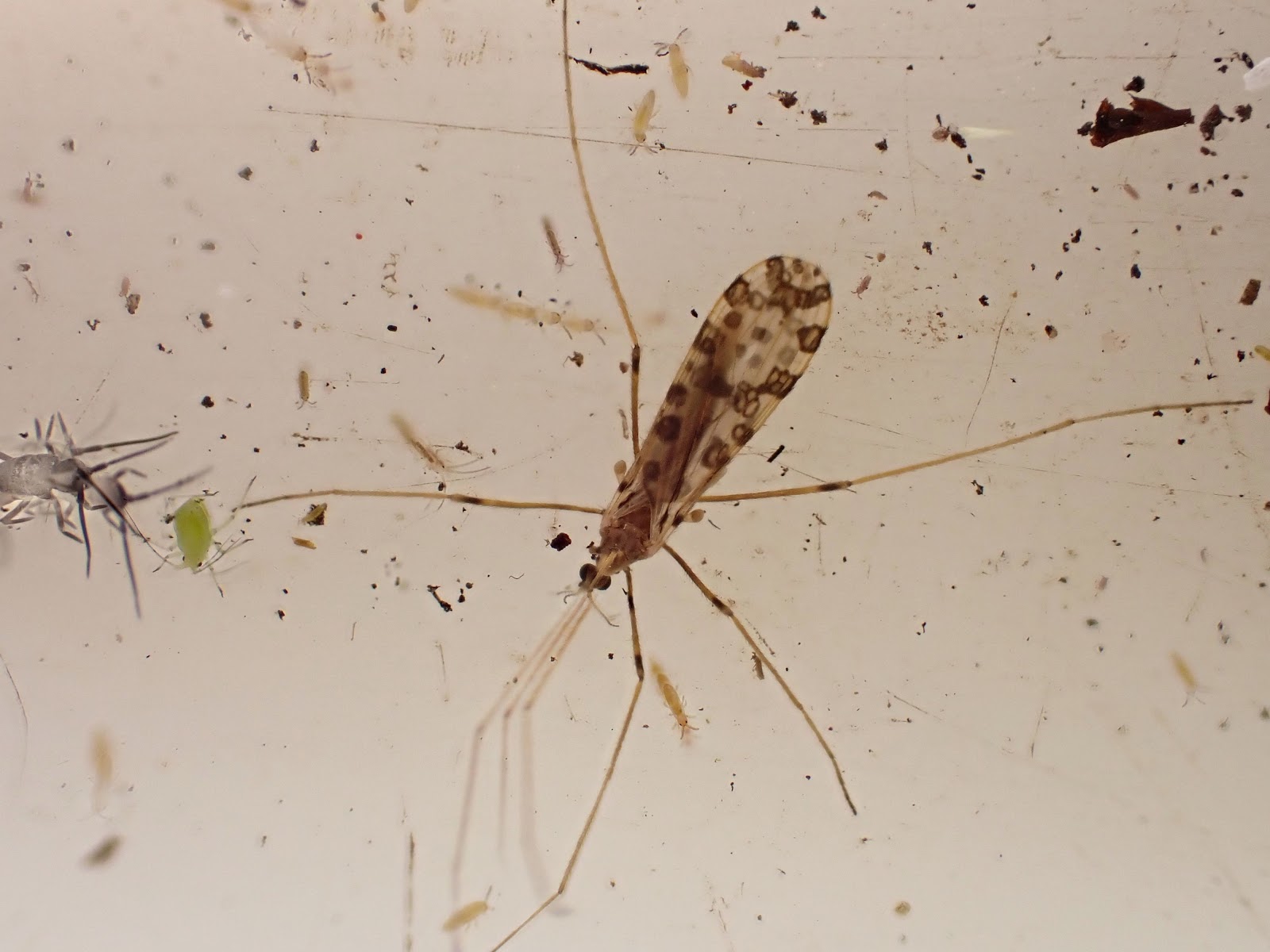
Ilisia macualata, with the bold block pattern on its wings.
 |
| Photograph: John Martin |
Ptychoptera contaminata – a mainly black fly, with a bold pattern on its wings.
 |
| Photograph: David Williams |
Tipula luna.
 |
| Photograph: David Williams |
Tipula vernalis.
 |
| Photograph: John Martin |
Hoverflies
Rhingia campestris, with its elongated face, that reaches parts of a plant that others can't - does that remind you of an advert for a certain brand of lager?
 |
| Photograph: John Martin |
Myathropa florea showing the “batman” pattern on the top of its thorax.
 |
| Photograph: John Martin |
Eupeodes corollae.
 |
| Photograph: John Martin |
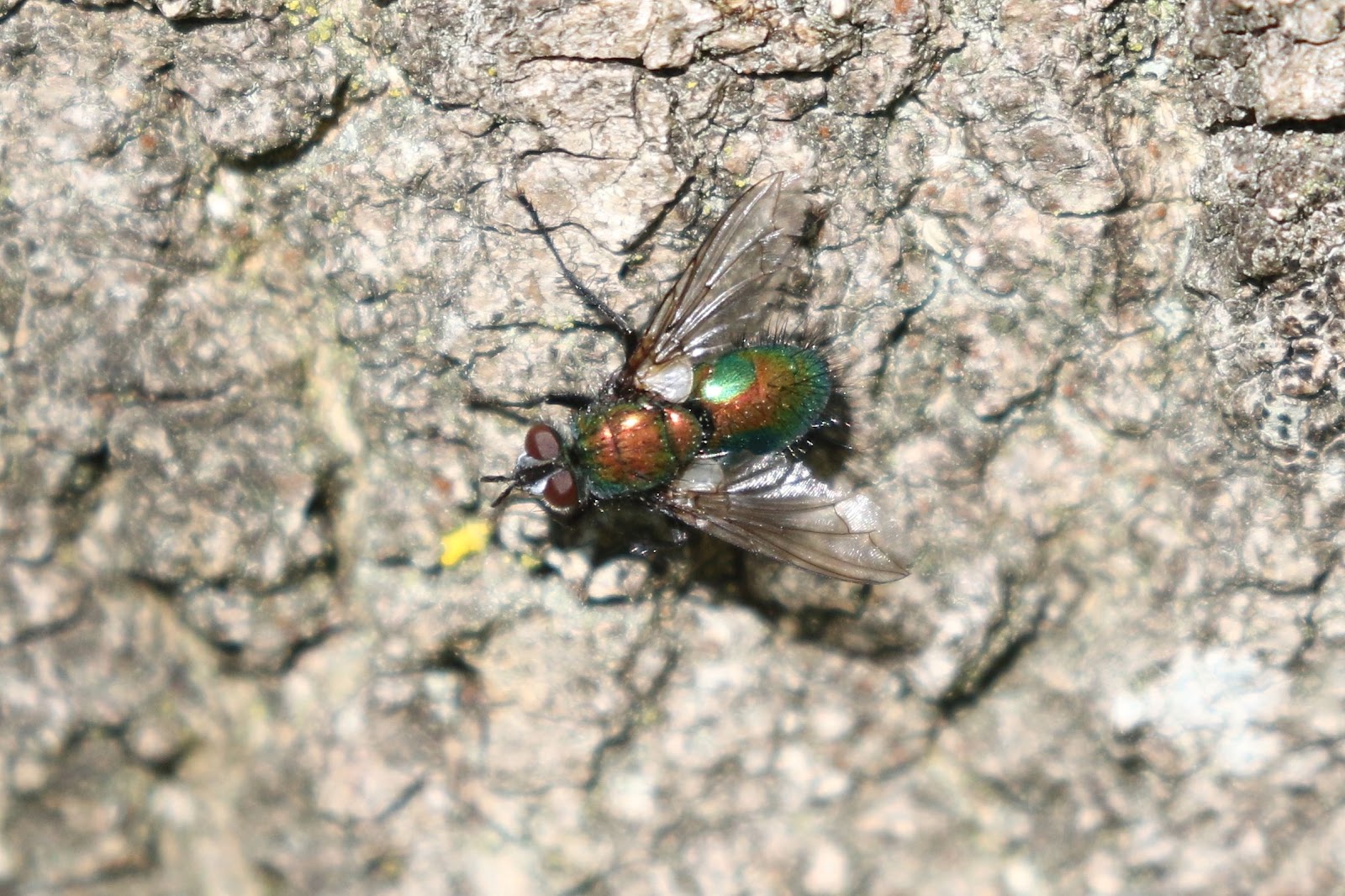
A tachinid fly, Gymnocheta viridis.
 |
| Photograph: John Martin |
A muscid fly, Limnophora tigrina, found on the mud at the edge of the mere.
 |
| Photograph: Nigel Jones |
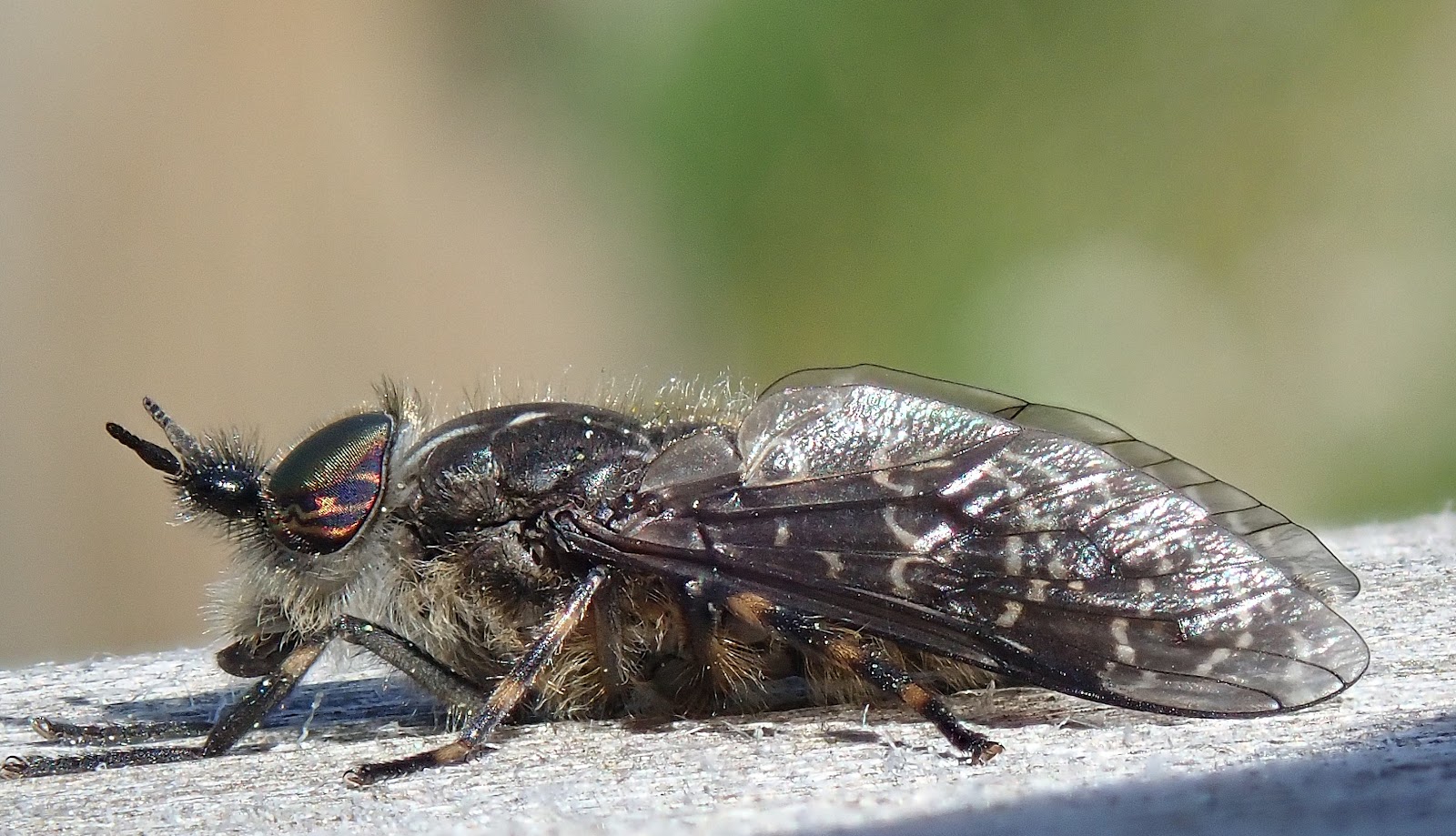
And finally, a horsefly, Haematopota crassicornis.
 |
| Photograph: Nigel Jones |
Horseflies often have well-patterned eyes and this species is no exception. Here is another photograph of this very smart fly species.
 |
| Photograph: John Martin |
Beetles
The first beetle, Gastrophysa polygoni, was found close to the car park.
 |
| Photograph: Nigel Cane-Honeysett |
Soon after reaching the edge of the mere we found a ground beetle, Elaphrus riparius, known as the Green-socks Peacock.
 |
| Photograph: David Williams |
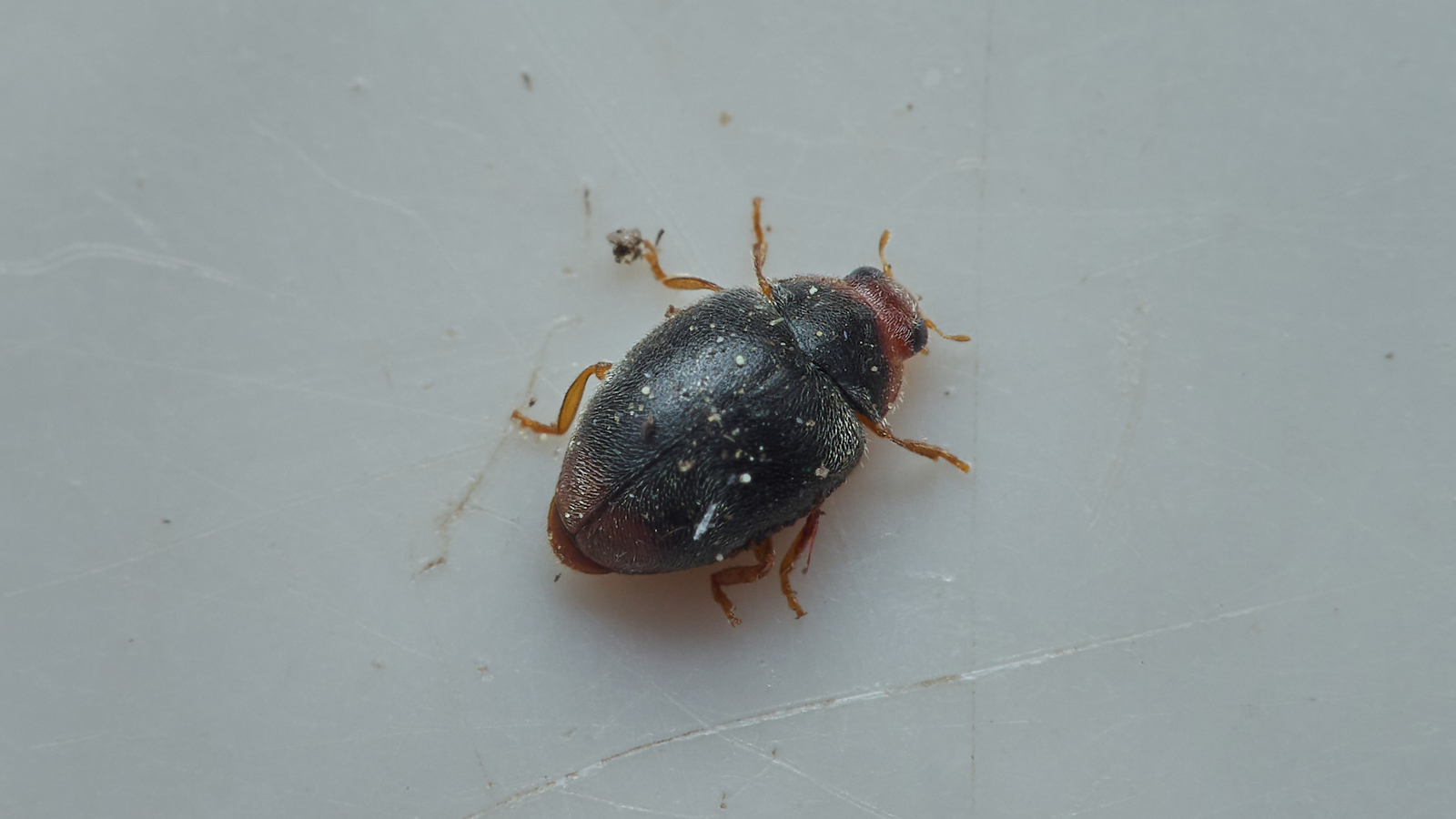
This was followed by a small ladybird, Scymnus haemorrhoidalis, otherwise called Red-rumped ladybird after the red tip to its abdomen.
 |
| Photograph: David Williams |
Beetles were found throughout the visit. Here are a few more.
Paederus riparius.
 |
| Photograph: Nigel Cane-Honeysett |
Tetrops praeustus, Plum Longhorn.
 |
| Photograph: David Williams |
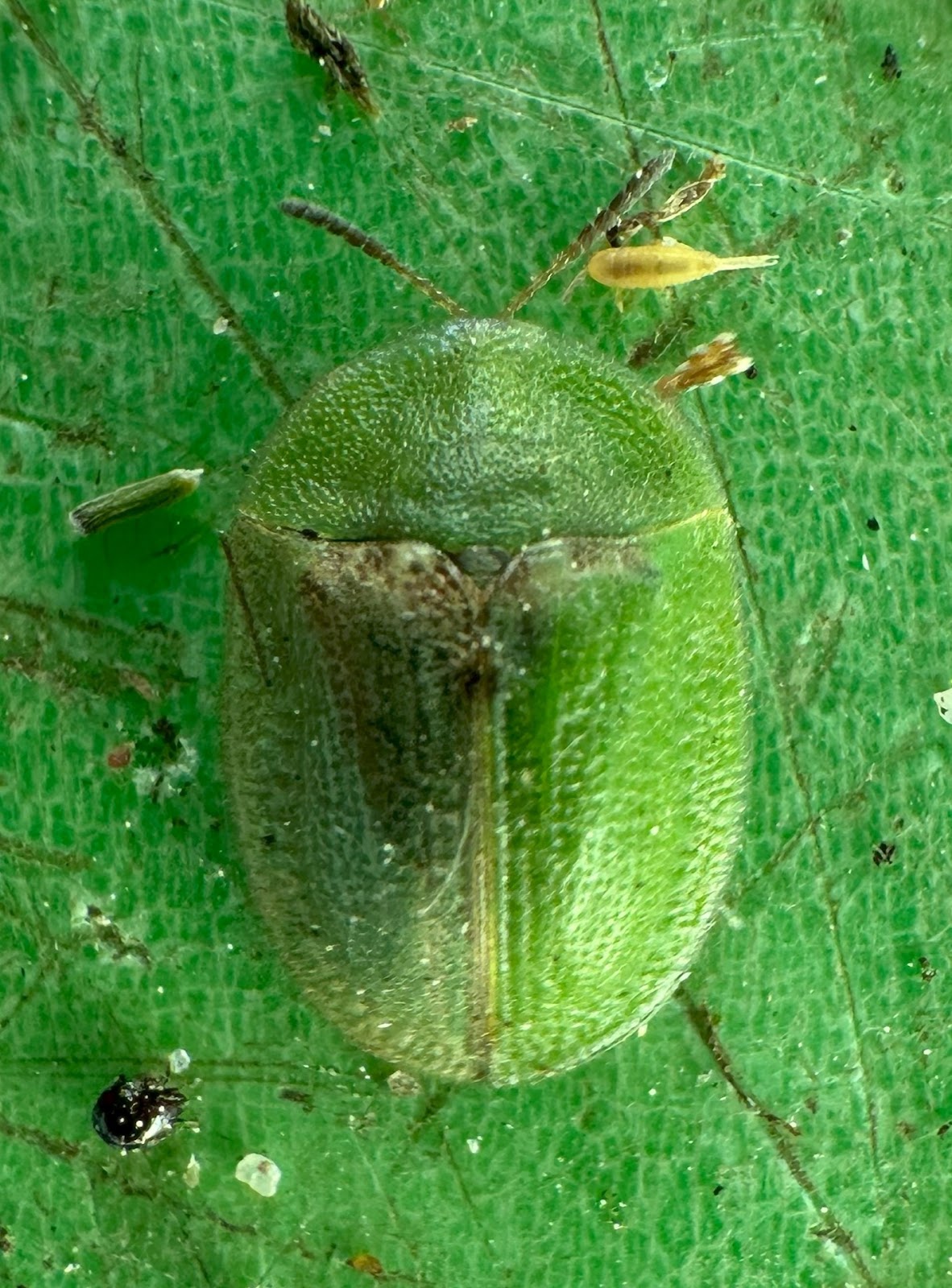
A tortoise beetle, Cassida rubignosa.
 |
| Photograph: Nigel Cane-Honeysett |
And as we were leaving the site we noticed this.
 |
| Photograph: John Martin |
This is a Ship’s timber beetle, Elateroides dermestoides.
Damselflies
Red-eyed damselfly.
 |
| Photograph: David Williams |
And a Common Blue damselfly.
 |
| Photograph: John Martin |
Spiders
Just the two were photographed.
A Nursery-web spider, Pisaura mirabilis.
 |
| Photograph: David Williams |
And a Gibbaraneae gibbosa, found in a ash tree.
 |
| Photograph: Nigel Cane-Honeysett |
Orthoptera
A Slender ground hopper.
 |
| Photograph: David Williams |
And a Conehead nymph.
 |
| Photograph: David Williams |
Moths
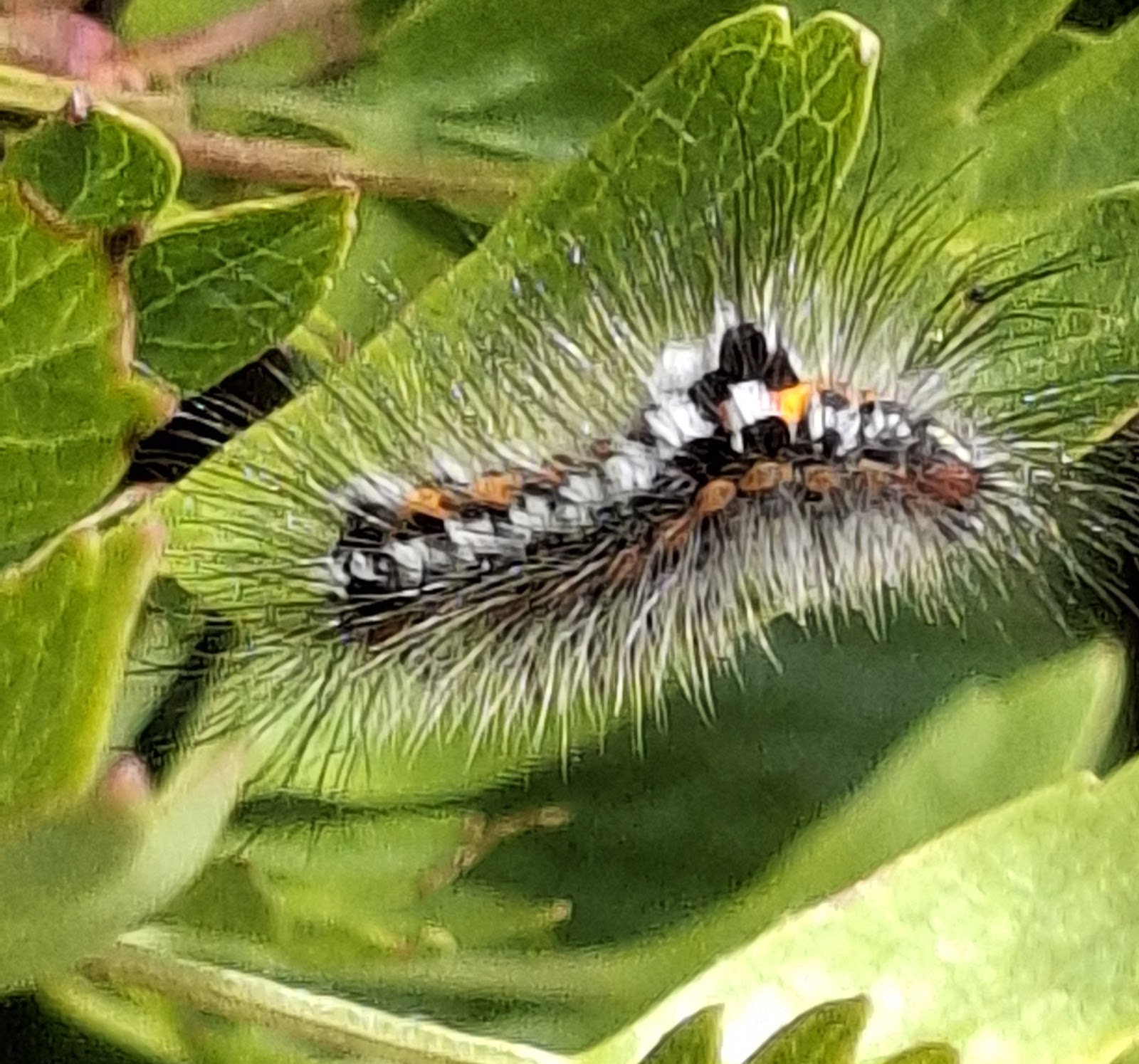
A brightly coloured and very hairy Yellow-tail moth larva.
 |
| Photograph: Neil Nash |
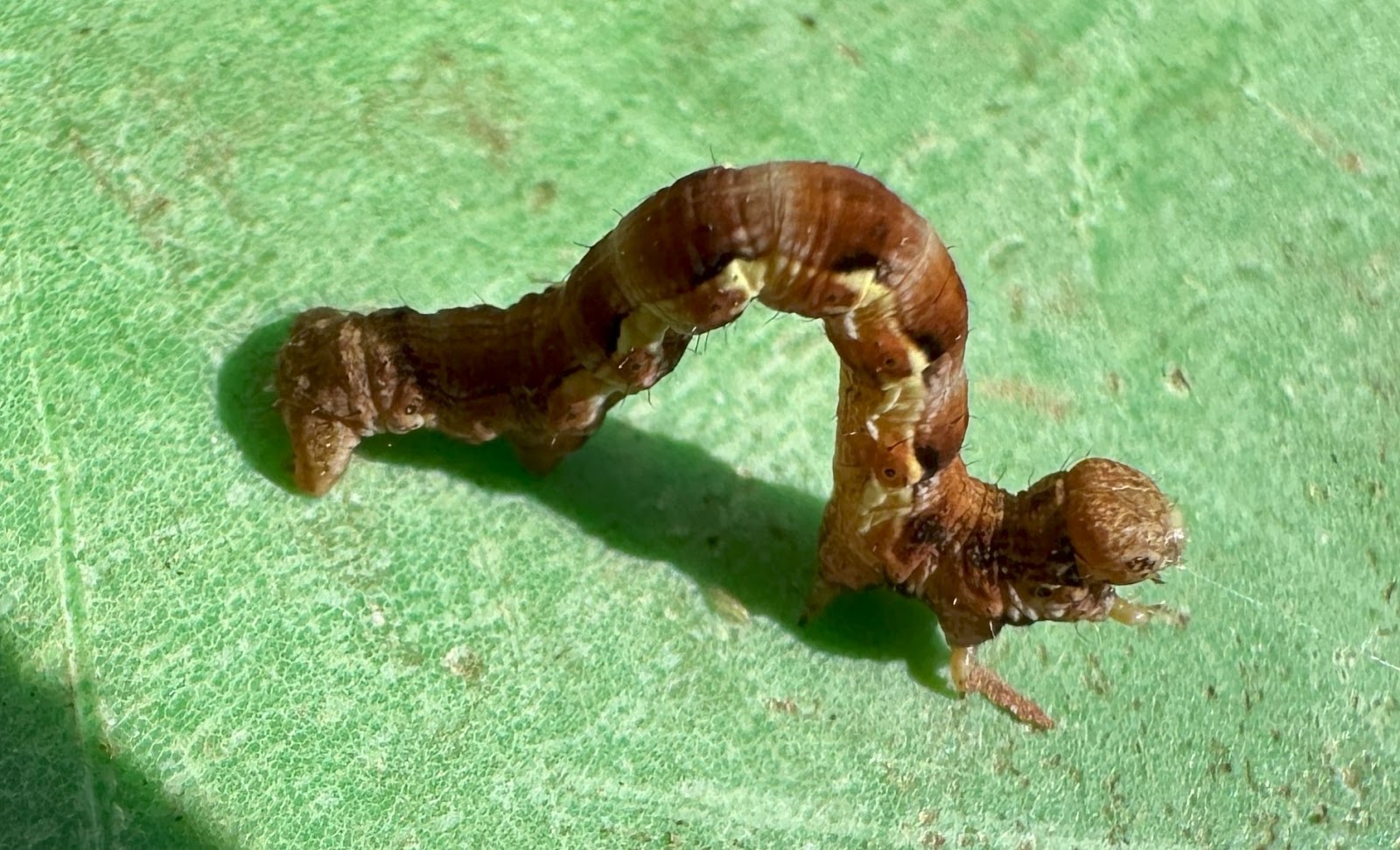
And a Short-cloaked moth larva.
 |
| Photograph: David Williams |
And to round off the photographs.
A Horse leech, Haemopsis sanguisuga.
 |
| Photograph: Neil Nash |
And a Ear Pond Snail, Radix auricularia.
 |
| Photograph: David Williams |
Phew!
My thanks to the land owners for granting us permission to enjoy ourselves, to Mags for making the arrangements and to the photographers for providing their excellent images for this report.







 Posts
Posts