8 Jul 2019

It's not a sting in the tail

Underhill Farm, Pant, Wednesday 3rd July 2019

We were a little tardy leaving. And as always happens when you are running late the traffic seemed against us with slow moving this and that getting in the way. But by the time we reached Knockin and mourned the passing of the Olde Knockin Shoppe I thought we were going to make it on time.

How wrong I was as we came to the sign declaring "ROAD CLOSED".

A diversion was provided which we took but we ended up on the outskirts of Oswestry before turning south to Pant. By now we were very late. However we got there eventually.

When we asked one of the others who had come from Telford if he had been held up he replied "What Diversion?".

He had come a different way from Knockin and was oblivious to the road closure. Lucky him!

Underhill Farm as suggested by the name nestles at the foot a hill - in this case Llanymynech Hill, which is the site of Llanymynech Rocks Nature Reserve. From where we parked we had a good view of the quarry face.


The owner of the farm met us and gave us a brief outline of the history and layout of the farm and what he is trying to achieve in the way he manages it. Unfortunately recent events have not helped his cause with Severn Trent driving a new water main through his land causing havoc and devastation across a wide swathe of land.

The photograph below gives a glimpse of how Severn Trent finished the job. Far from ideal leaving the owner with the problem of how best to restore the land.


In addition his tenant had cut the meadow early causing more frustration.

However it gave one of our group the chance to exercise his photographic imagination.

Photograph: Bob Kemp
In addition to a range of old buildings there was a range of facilities available to us: a picnic area; a sheltered area; a kitchen with a refrigerator and kettle and, joy of joys, a toilet. No need to nip behind a tree - Bliss!

We were taken through the entrance to view the facilities:
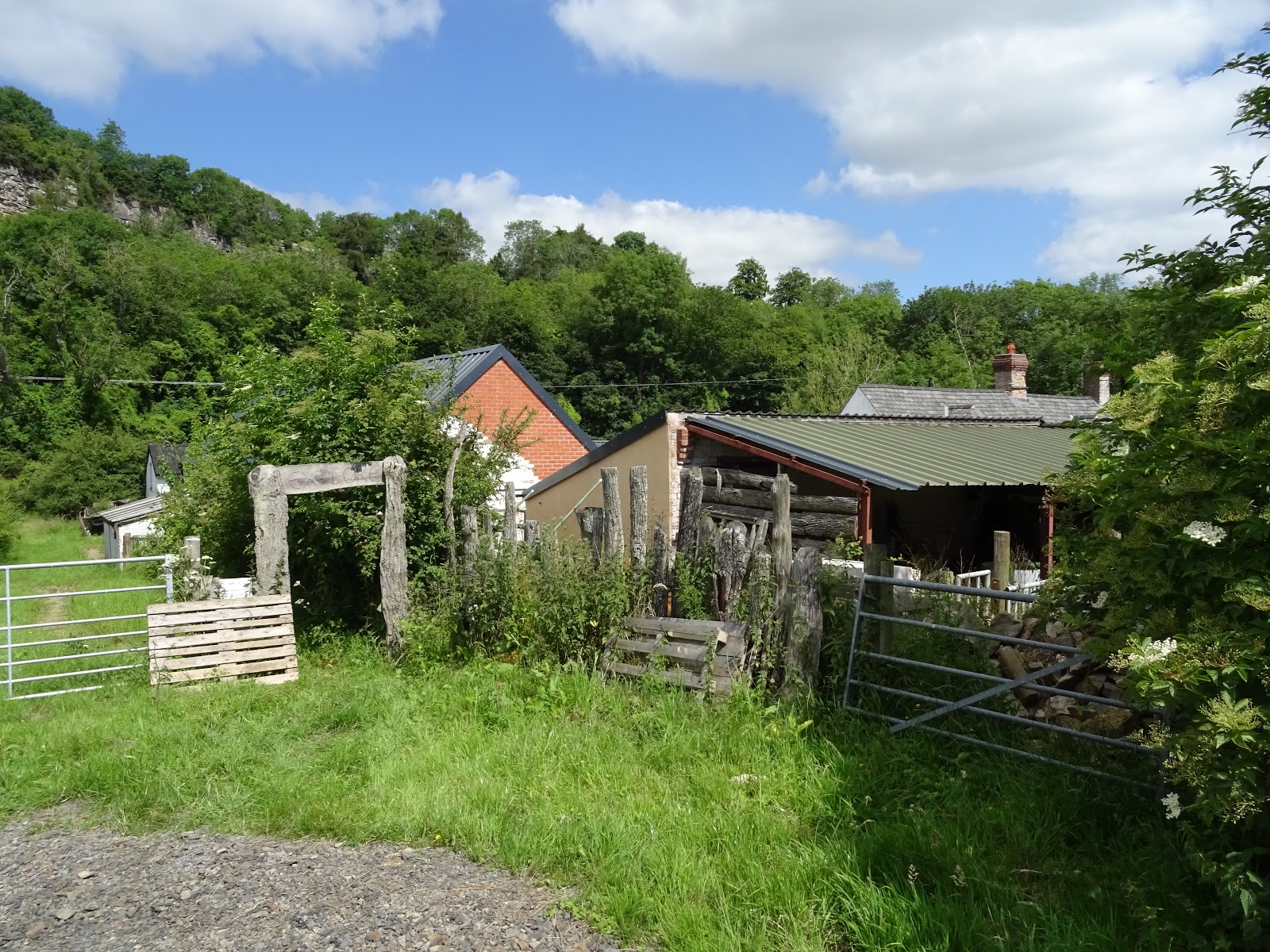

At the end of the path on the left of the buildings was a 19th century hay wain which will, all being well, be restored.

This again brought out the "artist" in our photographer:

Photograph: Bob Kemp
For those of you not hankering after the days of yore here it is in colour.


Close to the hay wain we found a Ringlet butterfly living up to its name with the row of "rings" along the edge of its wing.


Whilst close by a Harlequin ladybird had buried its head ostrich-like in a thistle.


We meandered to the recently mown meadow and inspected the hedgerow and dense marginal vegetation.


The margin harboured several Pyramidal orchids

Photograph: David Williams
Amongst the insects we found in this area was the larva of a Peacock butterfly:

Photograph: David Williams
A wasp with an extremely long ovipositor (no it is not a sting) which has tentatively been identified as Gasteruption jaculator:

Photograph: David Williams
Despite the wasp looking pretty distinctive there are lots of wasps that look similar! The wasp will inspect nest holes of solitary bees and wasps and if the conditions are right, insert its ovipositor into the nest hole and lay its own egg next to the egg of the host. The larva of the wasp on hatching will devour the larvae of the hosts and any food stored.

A 14-spot ladybird larva:

Photograph: David Williams
A Ruddy darter dragonfly:


And, finally, a Forest bug nymph.

Photograph: David Williams
A leisurely lunch was taken, quite late by my standards, at the picnic tables (although one or two had succumbed already).

Refreshed we moved into the field occupied by about a dozen sheep.

Photograph: David Williams
This field contained a couple of pools which were very quiet except for a Comma butterfly that posed on the leaf of a bur-reed.


The sun was beating down, the temperature was soaring and the energy of one or two or three members of the group was flagging ….


Restored after a brief rest we moved onto a third field.

Here we found a tiny Ant damsel bug nymph.

Photograph: David Williams
In this field a small sheet of metal had been placed on the grass. Reptiles are sometimes found under such a sheet, but more often than not it is ants and occasional amphibians. When this one was lifted there were slow worms underneath.

Photograph: David Williams
What a wonderful end to the day.

My thanks to Steve Evison for allowing us to visit his farm and Gareth Egarr of Shropshire Wildlife Trust for suggesting the site and providing the contact. My thanks also to the photographers David Williams and Bob Kemp for allowing me to use their photographs.

Steve Evision is involved in running two organisations that bring people and nature closer together. If you are interested you can find more information at the following two websites:


2 Jul 2019

In my absence

Hodnet Heath, Wednesday 26th June 2019

Hodnet Heath is a privately owned patch of heathland just outside, do I really need to say, Hodnet. 

It is a Site of Special Scientific Interest as a remaining small segment of the more extensive heathland that was present in North Shropshire. This site is predominantly wet heath with patches of dry heath and pools surrounded by secondary woodland.

I missed this trip as I was away on the Isle of Wight for a week. However I had a very able deputy who was able to keep an eye on things in my absence and ensure that the outing passed without incident.

My deputy is a man of few words and here is what he wrote about the visit:

"Arrived on time (more or less); overcast but dry; plodded down main path; had lunch; headed off towards schwingmoor; found cranefly, grass wave etc; went home."

To be fair he did offer to flesh it out, but why take up more of his time when that sentence encapsulated the day!

I need to expand a little on this summary.

The "schwingmoor" is an area of bog formed over water or mud and it quakes when you walk on it.

The cranefly was the beautifully marked Idioptera pulchella. A species that is rarely seen making this an exceptional find:

Photograph: David Williams
The "grass wave" is a moth which is found on lowland heathland, moorland and bogs.

Photograph: David Williams
Well, that's about it for this week. But before I sign off, I know you like to see the excellent photographs of species observed during the day. Here they are.

Bog bush cricket nymph:

Photograph: David Williams
The eggs of a bronze shieldbug:

Photograph: David Williams
The nest of buff-tailed bumble bees:

Photograph: David Williams
A slime mould, Ceratiomyxa fruticulosa:

Photograph: Bob Kemp
A group of Cinnabar moth caterpillars munching their way through a ragwort:

Photograph: David Williams
A weevil, one with a very long rostrum, Curculio venosus:

Photograph: Bob Kemp
A jumping spider, what big eyes it has:

Photograph: David Williams
A longhorn beetle, Leptura quadrifasciata:

Photograph: David Williams
Next a couple of bagworms. These are the larval stages of moths in the Psychidae family. The larvae of this family encase themselves in detritus to provide them with a disguise that protects them from predators. Often the moth can be identified from the structue of the case.

The first larva has included lichen in its case, this is Luffia ferchaultella:

Photograph: David Williams
The second is Psyche casta which has built its case from blades of grass and rush:

Photograph: David Williams
And finally a grasshopper - a meadow grasshopper.

Photograph: David Williams
My thanks to Pete Boardman for arranging access to this excellent site and permission to survey. My gratitude as always to the photographers David Williams and Bob Kemp for the use of their pictures. And special thanks to David as well for looking after the group in my absence.

26 Jun 2019

Creepy-crawlies in the Cemetery

Bridgnorth Cemetery, Wednesday 19th June 2019

After our second wash-out of the year the previous Wednesday we looked forward to a day in the sun and warmth at Bridgnorth Cemetery. 

Looking forward to and reality do not always agree but on this occasion, apart from a few insignificant drops of rain and some rather large clouds, they did, providing welcome relief from the run of poor weather that has dogged us this month.

The day did not start well. The area we were going to park in was cordoned off due to "essential tree work" and all the obvious parking spaces within the cemetery were taken up by Bridgnorth Council vehicles. Eventually we parked in front of one of the chapels hoping that it was not going to be needed during the day.

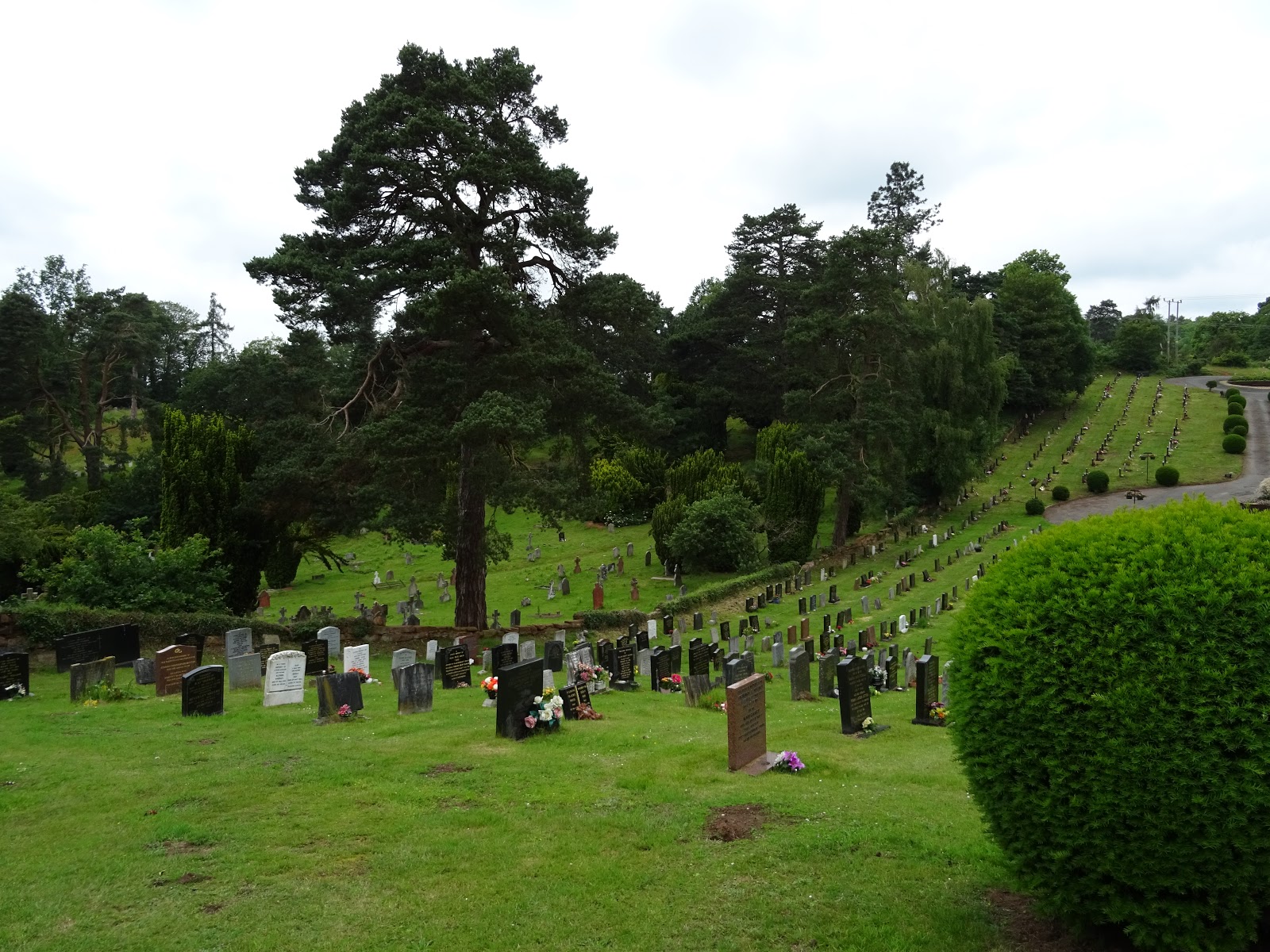
The cemetery appeared to be in two halves. The first section where the graves seemed to be arranged in a random pattern with the vegetation allowed to prosper:


And the second with the graves in neat rows:


We spent most of our time wandering around the first section as the longer vegetation is more attractive to insects giving them areas to feed, breed and hide. Also the older headstones are often colonised by lichens:

Photograph: Bob Kemp
Lichens form communities on the stones and as with other life forms some lichens predate on others to gain the resources they need to survive:

Photograph: Bob Kemp
In the photograph above the lichen on the right is a Cladonia and the one on the left is Diploschistes muscorum which is attacking the Cladonia for its algae to help it develop.

Many insects feed on algae and others use it for shelter. On another stone a host of mites could be seen around and on a lichen:

Photograph: Bob Kemp
Lichens and the stones they are on also provide excellent backgrounds for photographs. I cannot vouch for whether the following insect were found on the surfaces they were photographed on or placed there for the background effect:

A Chequered click beetle - Prosternon tessellatum

Photograph: Bob Kemp
 A nymph of a forest bug - Pentatoma rufipes

Photograph: Bob Kemp
 A Middle-barred minor moth:

Photograph: David Williams
A zebra spider with prey

Photograph: Bob Kemp
 And a moth that was new to me - a Bird's-wing moth.

Photograph: David Williams
Where there are stones aggregated into a structure there will be gaps between them which can be exploited. One such exploiter is a spider of the genus Amaurobius which builds its web across the holes and cracks and waits for its victims in the space behind. It can be enticed out of its lair by the judicious use of an electric toothbrush on the web.


The day was not all about stones, lichens and using them as background for photographs or teasing out spiders, we did search the vegetation and the trees.

The day saw the debut of a new piece of machinery to help our searches: the battery powered leaf blower. As with the petrol version it can be plumbed to suck rather than blow. This was used extensively until the bag used to collect the material split. After that we had to resort to our old favourite the moth-vac.

The battery-vac has a much smaller nozzle which may lead to reduced catches but it is about a quarter of the weight of the moth-vac and easier to handle making it a very attractive piece of equipment. I will try to include a picture of it in action in a later report.

Back to the animals that we found.

Great excitement from our Spider-Man greeted the discovery of this harvestman:

Photograph: David Williams
This is Homalenotus quadridentatus and was only the second time it had been found in the county.

We found a host on nymphs and larvae.

Firstly a couple of ladybird larvae.

A very ornate larva that develops into a small yellow and black ladybird common in grassland - a 24-spot ladybird:

Photograph: David Williams
A more plain one that will develop into a large red and black ladybird that lives primarily in Scot's pine - a Cream-streaked ladybird:

Photograph: David Williams
Next a couple of moth larvae.

A Scarce footman:

Photograph: David Williams
And a Mullein, found unsurprisingly on a Mullein plant.


And finally in this kiddies section some grasshoppers and their relations.

A meadow grasshopper:

Photograph: David Williams
An oak bush cricket:

Photograph: David Williams
And an aptly named Speckled bush cricket.

Photograph: David Williams
And what of the adults?

Here are a few.

The moth vac was very effective at finding a number of Bordered shieldbugs. These are normally quite elusive but when one is found you may well find several. And so it proved here when half a dozen or so were found.

Photograph: David Williams
A second much more common species of shieldbug was found. This is known by two common names Sloe bug or Hairy shieldbug (the nymphs are very hairy - less noticeable on the adults). Its scientific name is Dolycoris baccarum.

Photograph: David Williams
Hoverflies seem to be very scarce this year. We were hopeful at the start of the season that numbers may have recovered but that early optimism has died of late as they have proven harder to find. This one is Volucella pellucens.

Photograph: David Williams
Our final adult is one that is easy to overlook as just another blue damselfly - a White-legged damselfly. 

Photograph: David William
So a great day amongst the creepy-crawlies in the cemetery came to an end. Yet again we managed to visit an excellent site that has a desire to look after the needs of our animals as well as respecting the reason for its existence.

And finally I hope that the driver of this car before driving off remembered that he had put his photographic equipment on the roof.


Until next time, Bye!

Thank you to Bridgnorth Council and the staff at the Cemetery for letting us do what we enjoy doing; to Caring for God's Acre for making all the arrangements and to the photographers David Williams and Bob Kemp for providing their photographs for me to use.